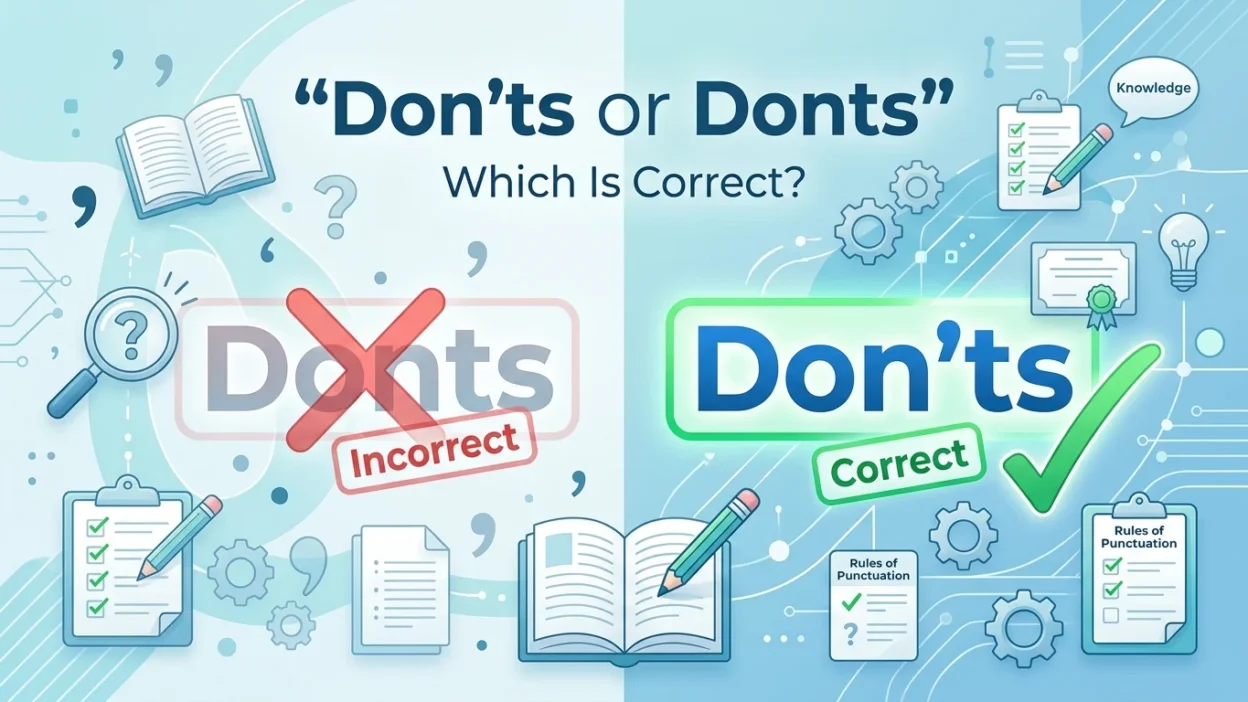
If you have ever wondered whether “donts” or “don’ts” is the correct spelling, you are not alone. Apostrophes can be confusing in English, especially when forming plural words from contractions. Many writers leave out the apostrophe and write “donts,” assuming it follows normal plural rules.
However, in standard English, “don’ts” is the correct form. The apostrophe is important because the word comes from the contraction “don’t” (do not). Understanding this simple rule can help you avoid a common writing mistake and make your communication look more polished.
Quick Answer
Don’ts is the correct spelling.
Donts is incorrect in standard English.
Correct Example
- Here are the dos and don’ts of job interviews.
Incorrect Example
- Here are the dos and donts of job interviews.
What Does Don’ts Mean?
Don’ts is the plural form of “don’t.”
It refers to:
- things you should not do
- prohibited actions
- mistakes to avoid
- rules or guidelines against certain behaviors
The word is commonly used alongside:
- dos and don’ts
Examples of Don’ts in Sentences
- Learn the dos and don’ts of public speaking.
- The guide explains travel don’ts for first-time visitors.
- Parents often teach their children important don’ts.
- The article covers workplace dos and don’ts.
- Understanding social media don’ts can protect your reputation.
Is Donts a Real Word?
No, donts is not considered the correct spelling in modern English.
Because the word comes from the contraction:
- don’t
the apostrophe remains when the word becomes plural:
- don’ts
Why Does Don’ts Need an Apostrophe?
The word originates from:
- don’t = do not
When making it plural, English keeps the apostrophe to preserve the original contraction.
Formula:
- don’t → don’ts
Not:
- donts
Don’ts vs Donts Comparison Table
| Feature | Don’ts | Donts |
|---|---|---|
| Correct spelling | Yes | No |
| Standard English | Accepted | Incorrect |
| Contains apostrophe | Yes | No |
| Used in professional writing | Yes | No |
| Dictionary approved | Yes | No |
Correct Word Structure
don’t→don’ts
Common Mistakes With Don’ts
Removing the Apostrophe
Incorrect:
- Follow these dos and donts.
Correct:
- Follow these dos and don’ts.
Treating It Like a Regular Plural
Many nouns form plurals by simply adding:
- s
However, don’ts is different because it comes from a contraction.
Typing Shortcuts
Writers often skip apostrophes when typing quickly, leading to errors.
The Famous Phrase: Dos and Don’ts
The most common use of don’ts appears in the phrase:
- dos and don’ts
Meaning:
- recommended actions and actions to avoid
Examples
- Interview dos and don’ts
- Classroom dos and don’ts
- Travel dos and don’ts
- Workplace dos and don’ts
Similar Examples
Other contractions may keep apostrophes in special plural forms.
| Singular | Plural |
|---|---|
| don’t | don’ts |
| can’t | can’ts |
| won’t | won’ts |
Although these plural forms are less common, they follow the same principle.
American vs British English Differences
There is no difference between American English and British English for this word.
Both use:
- don’ts
Both consider:
- donts
incorrect.
Why Correct Punctuation Matters
Using the correct form improves:
- professionalism
- readability
- grammar accuracy
- writing clarity
- credibility
Missing apostrophes can make writing appear careless and less polished.
Common Phrases Using Don’ts
Dos and Don’ts
Meaning: recommended and discouraged actions.
Example:
- The handbook explains workplace dos and don’ts.
Parenting Don’ts
Meaning: actions parents should avoid.
Example:
- The article lists common parenting don’ts.
Interview Don’ts
Meaning: mistakes to avoid during interviews.
Example:
- Arriving late is one of the biggest interview don’ts.
Social Media Don’ts
Meaning: poor online behaviors.
Example:
- Oversharing is among the most common social media don’ts.
Tips to Remember the Correct Spelling
Keep the Apostrophe
Correct:
- don’ts
Not:
- donts
Remember the Original Word
The word comes from:
- don’t
So the apostrophe stays.
Think of the Common Phrase
Most people recognize:
- dos and don’ts
This phrase can help reinforce the correct spelling.
FAQs
Which spelling is correct: don’ts or donts?
Don’ts is the correct spelling.
Why does don’ts have an apostrophe?
Because it comes from the contraction don’t, and the apostrophe is retained in the plural form.
Is donts a real word?
No. It is considered a spelling and punctuation error in standard English.
What does don’ts mean?
It refers to actions, behaviors, or practices that should be avoided.
Is don’ts used in British and American English?
Yes. Both varieties use don’ts.
What is the meaning of “dos and don’ts”?
It means recommended actions and actions that should be avoided.
Can I write donts without an apostrophe?
No. Standard English requires the apostrophe.
How can I remember the correct spelling?
Remember:
- don’t → don’ts
The apostrophe stays.
Final Summary
The difference between donts or don’ts is simple but important. Don’ts is the correct plural form derived from the contraction “don’t,” while donts is incorrect in standard English. The apostrophe remains because it is part of the original word.
If you are writing business documents, blog posts, educational content, emails, or social media guidelines, using don’ts correctly helps your writing look polished, professional, and grammatically accurate. Small punctuation details often make a big difference.
Actionable Takeaway
Whenever referring to things people should avoid, write:
- don’ts
Not:
- donts
A simple memory trick:
- don’t → don’ts
Keep the apostrophe, and you will always get it right.