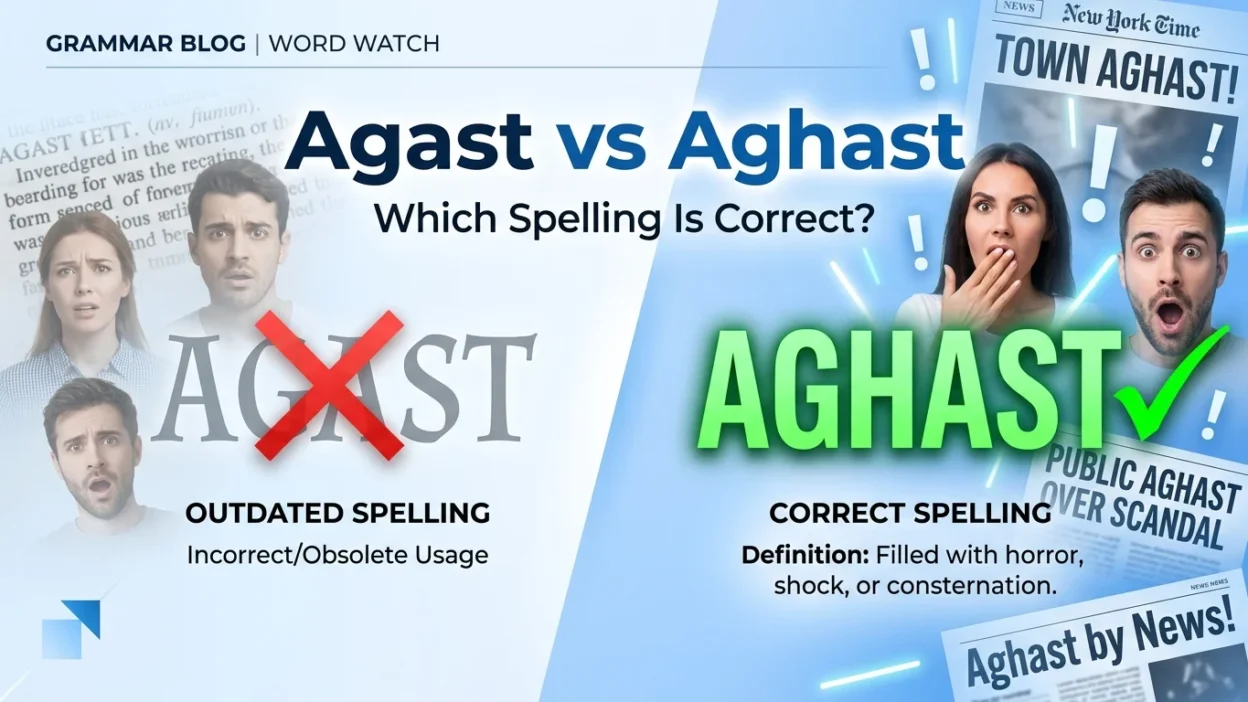
Have you ever seen the words “agast” and “aghast” and wondered which one is correct? You are not alone. Because the words sound similar when spoken, many writers accidentally drop the “h” and use agast instead of aghast.
In modern English, “aghast” is the correct and standard spelling. While “agast” appeared in older forms of English centuries ago, it is now considered archaic and is rarely used. If you want your writing to sound natural, professional, and grammatically correct, aghast is the word you should choose.
Quick Answer
“Aghast” is the correct spelling in modern English.
“Agast” is an old, obsolete variant that is rarely used today.
Correct Example
- She was aghast when she heard the shocking news.
Outdated Example
- She was agast when she heard the shocking news.
What Does Aghast Mean?
Aghast is an adjective that means:
- shocked
- horrified
- filled with surprise
- extremely dismayed
It is often used when someone reacts strongly to unexpected or disturbing news.
Examples of Aghast in Sentences
- The audience was aghast at the sudden announcement.
- He looked aghast when he saw the damage.
- She was aghast at the cost of the repairs.
- The teacher was aghast by the students’ behavior.
- Everyone stood aghast after hearing the verdict.
Is Agast a Real Word?
Yes, agast is historically a real word.
It was used in older English as a variation of aghast, but it has largely disappeared from modern usage.
Today, dictionaries and style guides overwhelmingly recommend:
- aghast
instead of:
- agast
Why Is Aghast the Preferred Spelling?
Over time, English standardized the spelling as:
- aghast
The version with the “h” became the accepted form in literature, journalism, education, and everyday writing.
As a result:
- aghast = modern standard
- agast = archaic spelling
Agast vs Aghast Comparison Table
| Feature | Aghast | Agast |
|---|---|---|
| Modern standard spelling | Yes | No |
| Commonly used today | Yes | Rarely |
| Accepted in professional writing | Yes | No |
| Dictionary preferred form | Yes | No |
| Historical usage | Yes | Yes |
Correct Word Structure
aghast=agast
Common Mistakes With Aghast
Omitting the “H”
Incorrect:
- I was agast at the results.
Correct:
- I was aghast at the results.
Relying on Pronunciation Alone
Since the “h” is not strongly pronounced, some writers mistakenly leave it out.
Confusing Modern and Historical Spellings
Older texts occasionally contain agast, but modern English almost always uses aghast.
Different Uses of Aghast
Shock
Example:
- She was aghast at the sudden resignation.
Horror
Example:
- The witnesses were aghast at what they saw.
Surprise
Example:
- He looked aghast when he learned the truth.
Disapproval
Example:
- The committee was aghast at the proposal.
Synonyms for Aghast
Depending on context, similar words include:
- shocked
- horrified
- stunned
- appalled
- dismayed
Example
- The crowd was shocked and aghast by the announcement.
Opposites of Aghast
Antonyms include:
- calm
- pleased
- delighted
- unsurprised
- composed
Example
- She remained calm instead of feeling aghast.
American vs British English Differences
There is no spelling difference between American English and British English.
Both use:
- aghast
Both consider:
- agast
an outdated spelling.
Why Correct Spelling Matters
Correct spelling improves:
- professionalism
- readability
- credibility
- communication clarity
- writing quality
Using archaic spellings like agast can make modern writing appear outdated or incorrect.
Common Phrases Using Aghast
Look Aghast
Meaning: appear shocked.
Example:
- He looked aghast when he opened the bill.
Stand Aghast
Meaning: remain frozen in shock.
Example:
- They stood aghast at the scene.
Aghast at the News
Meaning: shocked by information received.
Example:
- She was aghast at the news of the accident.
Aghast by the Decision
Meaning: deeply surprised or upset by an outcome.
Example:
- Many residents were aghast by the decision.
Tips to Remember the Correct Spelling
Remember the Silent “H”
Correct:
- aghast
Not:
- agast
Think of “Ghost”
Both words contain:
- gh
Although they are pronounced differently.
Practice Full Sentences
Example:
- I was aghast at the unexpected announcement.
FAQs About Agast vs Aghast
Which spelling is correct: agast or aghast?
Aghast is the correct spelling in modern English.
Is agast a real word?
Yes, but it is an archaic spelling that is rarely used today.
What does aghast mean?
It means shocked, horrified, stunned, or deeply surprised.
Why is aghast preferred over agast?
Modern English standardized aghast as the accepted spelling.
Is aghast used in British and American English?
Yes. Both varieties use aghast.
What are synonyms for aghast?
Common synonyms include shocked, horrified, appalled, stunned, and dismayed.
Can I use agast in modern writing?
It is generally not recommended because most readers expect aghast.
How can I remember the correct spelling?
Remember:
- aghast contains gh
Just like many traditional English words.
Final Summary
The difference between agast vs aghast is mainly historical. “Aghast” is the correct and accepted spelling in modern English, used to describe feelings of shock, horror, disbelief, or dismay. “Agast” is an older spelling that has largely fallen out of use.
Whether you are writing essays, articles, emails, stories, or professional documents, choosing aghast ensures your writing follows current English standards. Using the modern spelling helps your message appear polished, accurate, and easy to understand.
Actionable Takeaway
Whenever you want to describe someone as shocked, horrified, or stunned, always write:
- aghast
Avoid:
- agast
A simple memory trick:
- aghast = includes “gh”
Using this standard spelling will make your writing clearer and more professional.