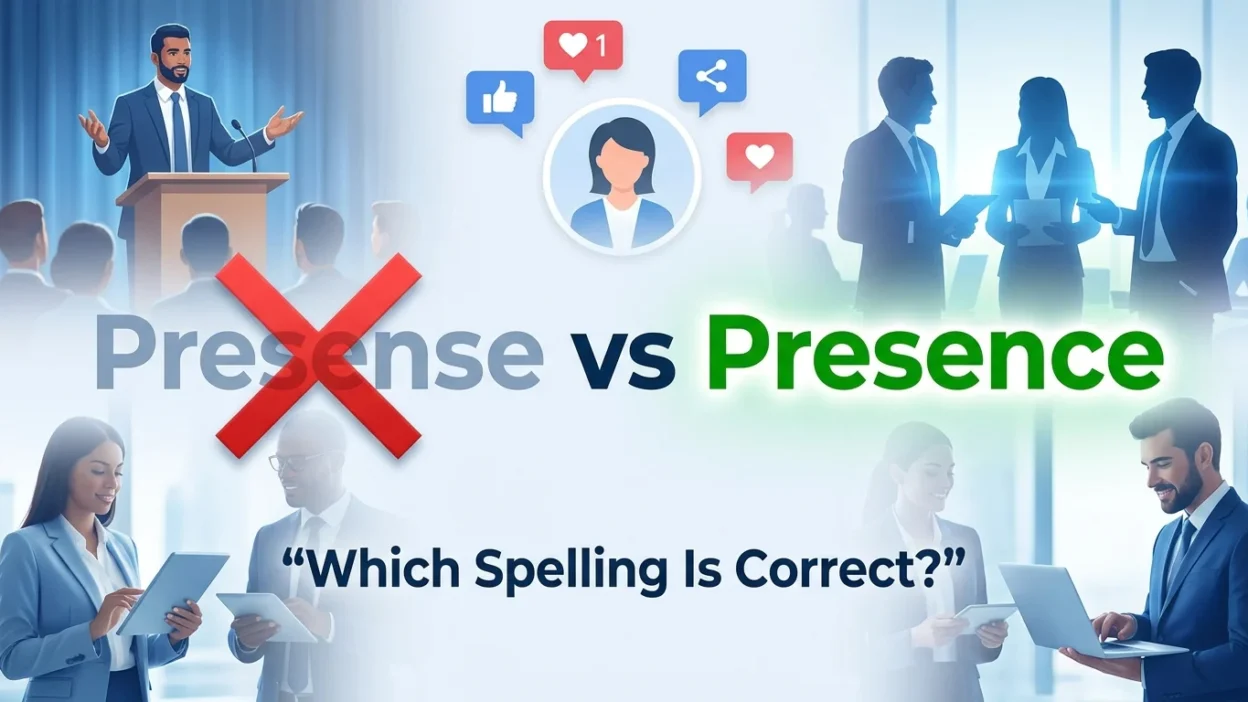
English spelling can sometimes be confusing because many words sound almost identical even when only one spelling is correct. One common mistake people make is writing “presense” instead of “presence.” Since both words sound similar when spoken, the confusion is understandable.
The correct spelling is “presence.” Meanwhile, “presense” is incorrect in standard English. Learning the proper spelling can improve your grammar, writing accuracy, and confidence in professional, academic, and everyday communication.
Quick Answer
“Presence” is the correct spelling.
“Presense” is incorrect in standard English.
Correct Example
- Her presence made everyone feel comfortable.
Incorrect Example
- Her presense made everyone feel comfortable.
What Does Presence Mean?
The word “presence” is a noun that refers to:
- the state of being somewhere
- a person’s appearance or influence
- a noticeable quality or aura
It is commonly used in:
- conversation
- business
- leadership
- writing
- public speaking
Examples of Presence in Sentences
- His presence changed the atmosphere in the room.
- The teacher’s presence kept the class calm.
- She has a strong social media presence.
- Police presence increased during the event.
- Her stage presence impressed the audience.
Is Presense a Real Word?
No, “presense” is not considered a correct English word.
It is simply a spelling mistake caused by confusion between:
- ence
and - ense
Standard dictionaries and grammar guides only recognize:
- presence
Why Do People Write “Presense”?
The mistake usually happens because:
- the ending sounds like “sense”
- many English words end in “-ense”
- pronunciation does not clearly reveal the correct spelling
However, the correct word ends with:
- ence
Not:
- ense
Presence vs Presense Comparison Table
| Feature | Presence | Presense |
|---|---|---|
| Correct spelling | Yes | No |
| Standard English | Accepted | Incorrect |
| Dictionary word | Yes | No |
| Used professionally | Yes | No |
| Grammar approved | Yes | No |
Correct Word Structure
presence=presense
Related Word Forms
| Word Type | Correct Form |
|---|---|
| Verb | present |
| Noun | presence |
| Adjective | present |
| Adverb | presently |
These related forms help reinforce the correct spelling.
Common Mistakes With Presence
Using “ENSE” Instead of “ENCE”
Incorrect:
- Your presense is appreciated.
Correct:
- Your presence is appreciated.
Spelling by Pronunciation
Since “presence” sounds similar to “sense,” some writers incorrectly copy that spelling pattern.
Fast Typing Errors
Quick typing often leads to swapped letter combinations.
Different Meanings of Presence
Physical Presence
Meaning: being physically somewhere.
Example:
- Your presence is required at the meeting.
Strong Personality
Meaning: noticeable charisma or influence.
Example:
- The leader had a commanding presence.
Online Presence
Meaning: visibility on the internet or social media.
Example:
- Businesses need a strong online presence.
Emotional Presence
Meaning: giving attention and awareness to others.
Example:
- Parents should maintain emotional presence with children.
Synonyms for Presence
Depending on context, similar words include:
- attendance
- appearance
- aura
- influence
- existence
Example
- Her influence and presence inspired the team.
Opposites of Presence
Antonyms include:
- absence
- invisibility
- nonattendance
Example
- His absence was immediately noticeable.
American vs British English Differences
There is no spelling difference between American English and British English for this word.
Both use:
- presence
Neither standard variety uses:
- presense
Why Correct Spelling Matters
Correct spelling improves:
- professionalism
- readability
- communication clarity
- grammar accuracy
- writing confidence
Misspellings like “presense” may:
- distract readers
- reduce credibility
- appear careless
Common Phrases Using Presence
Online Presence
Meaning: visibility on digital platforms.
Example:
- The brand improved its online presence.
Strong Presence
Meaning: powerful influence or visibility.
Example:
- The athlete has a strong media presence.
Presence of Mind
Meaning: calm thinking during stressful situations.
Example:
- She showed great presence of mind during the emergency.
Physical Presence
Meaning: being physically present.
Example:
- Physical presence was required for the interview.
Tips to Remember the Correct Spelling
Remember “ENCE”
Correct:
- presence
Not:
- presense
Connect It With “Present”
Both words share the root:
- present
Practice Full Sentences
Example:
- Her presence made the event more enjoyable.
FAQs
Which spelling is correct: presense or presence?
“Presence” is the correct spelling.
Is presense a real word?
No. “Presense” is considered incorrect in standard English.
What does presence mean?
It means the state of being somewhere or having noticeable influence.
Why do people spell presence incorrectly?
Usually because the word sounds similar to words ending in “-sense.”
Is presence used in British and American English?
Yes. Both varieties use “presence.”
What are synonyms for presence?
Common synonyms include attendance, appearance, influence, and aura.
What is the opposite of presence?
The opposite is:
- absence
How can I remember the correct spelling?
Remember:
- present → presence
Both use:
- ence
Final Summary
The difference between presense vs presence is simple once you know the correct spelling. “Presence” is the accepted and standard English word used to describe being somewhere, noticeable influence, or personal impact, while “presense” is simply a common spelling mistake.
Whether you are writing essays, emails, business documents, blog posts, or social media content, using “presence” correctly helps your writing appear polished, accurate, and trustworthy. Small spelling improvements like this can significantly strengthen communication clarity and professionalism.
Actionable Takeaway
Whenever referring to someone’s appearance, influence, or state of being present, always write:
- presence
Not:
- presense
Remember the simple spelling connection:
- present → presence
This easy memory trick will help you avoid a very common English spelling mistake.