Have you ever typed “procede” and wondered whether it should actually be “proceed”? You are not alone. This spelling confusion is common because both words look similar, and the pronunciation does not make the difference immediately obvious.
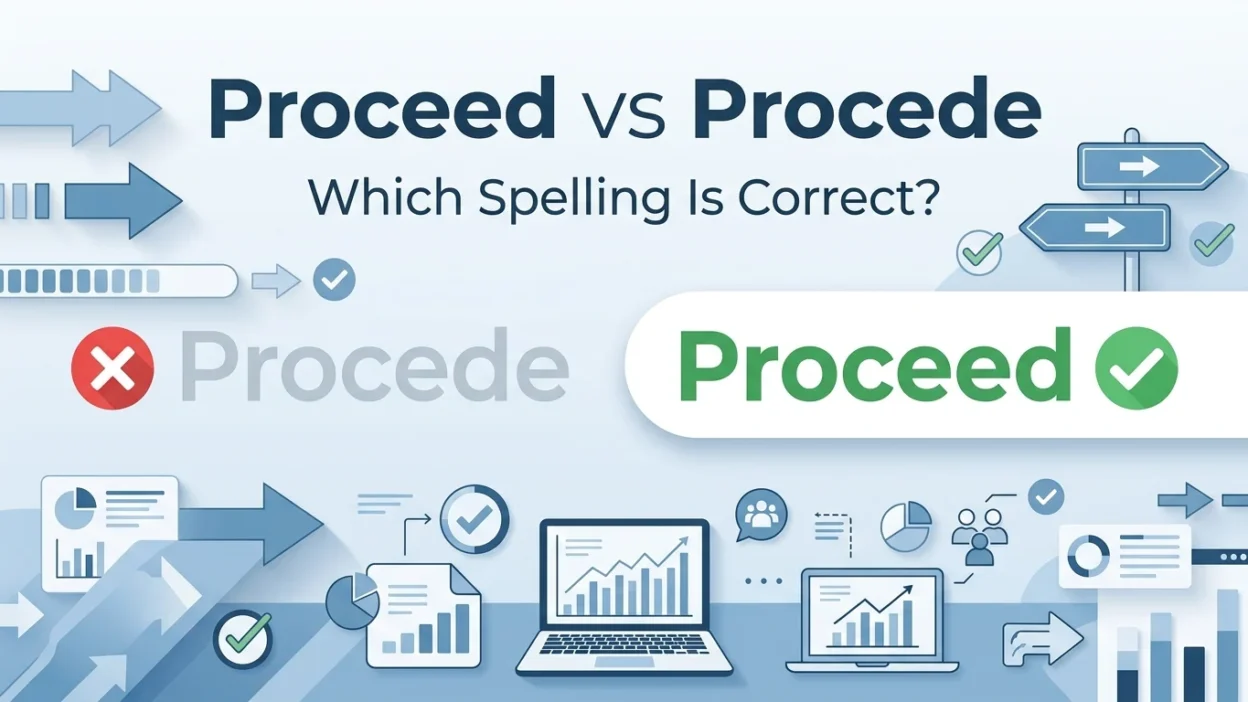
The good news is that the answer is simple. “Proceed” is the correct spelling in standard English, while “procede” is a misspelling. Understanding the difference can help you write with greater confidence and avoid a common grammar mistake in emails, essays, business documents, and everyday communication.
Quick Answer
“Proceed” is the correct spelling.
“Procede” is incorrect in modern English.
Correct Example
- Please proceed to the next step.
Incorrect Example
- Please procede to the next step.
What Does Proceed Mean?
The word “proceed” is a verb that means:
- to continue
- to move forward
- to begin the next stage of a process
- to take action after a pause or interruption
It is commonly used in both formal and informal situations.
Examples of Proceed in Sentences
- We can proceed with the meeting now.
- Please proceed carefully through the construction zone.
- The judge allowed the lawyer to proceed.
- After approval, the project will proceed as planned.
- She decided to proceed with her education.
Is Procede a Real Word?
No, “procede” is not considered a correct English word.
It is simply a spelling mistake that occurs when writers forget that proceed contains a double “e.”
Standard dictionaries and grammar guides recognize only:
- proceed
Why Is Proceed Spelled With Double “E”?
The word comes from Latin and entered English with the spelling:
- proceed
Many English words use the “ee” pattern, including:
- succeed
- exceed
- agreed
- indeed
Because of this established spelling pattern, the correct form is always:
- proceed
Not:
- procede
Proceed vs Procede Comparison Table
| Feature | Proceed | Procede |
|---|---|---|
| Correct spelling | Yes | No |
| Standard English | Accepted | Incorrect |
| Dictionary word | Yes | No |
| Used in professional writing | Yes | No |
| Grammar approved | Yes | No |
Correct Word Structure
proceed=procede
Common Mistakes With Proceed
Forgetting the Second “E”
This is the most common error.
Incorrect:
- We will procede with the plan.
Correct:
- We will proceed with the plan.
Fast Typing Errors
Many writers accidentally omit one of the “e” letters while typing quickly.
Confusing Similar Words
People sometimes confuse:
- proceed
- precede
Although they look similar, they have different meanings.
Proceed vs Precede
These words are often mixed up.
| Word | Meaning |
|---|---|
| Proceed | To continue or move forward |
| Precede | To come before |
Examples
- Let’s proceed with the presentation.
- A short introduction will precede the discussion.
Different Uses of Proceed
Continuing an Action
Example:
- The team decided to proceed with development.
Moving Forward
Example:
- Drivers may proceed when the light turns green.
Legal Context
Example:
- The court allowed the case to proceed.
Business Context
Example:
- Management approved the proposal, so the project will proceed.
Synonyms for Proceed
Depending on the context, similar words include:
- continue
- advance
- move forward
- carry on
- progress
Example
- The project will continue and proceed as scheduled.
Opposites of Proceed
Antonyms include:
- stop
- halt
- pause
- discontinue
- abandon
Example
- Officials decided to halt the operation rather than proceed.
American vs British English Differences
There is no spelling difference between American English and British English for this word.
Both use:
- proceed
Neither standard variety uses:
- procede
Why Correct Spelling Matters
Correct spelling improves:
- professionalism
- readability
- communication clarity
- writing confidence
- credibility
Misspellings like “procede” may:
- distract readers
- reduce trust
- appear careless
Common Phrases Using Proceed
Proceed With Caution
Meaning: continue carefully.
Example:
- Drivers should proceed with caution during heavy rain.
Proceed Further
Meaning: continue to the next stage.
Example:
- You cannot proceed further without permission.
Proceed Accordingly
Meaning: act based on the available information.
Example:
- Review the instructions and proceed accordingly.
Proceed to Checkout
Meaning: move to the payment stage.
Example:
- After selecting your items, proceed to checkout.
Tips to Remember the Correct Spelling
Think of Double “E”
Correct:
- proceed
Not:
- procede
Connect It With Exceed and Succeed
These words all share the:
- ee
pattern.
Practice Full Sentences
Example:
- We are ready to proceed with the project.
FAQs
Which spelling is correct: proceed or procede?
Proceed is the correct spelling.
Is procede a real word?
No. “Procede” is considered a misspelling in standard English.
What does proceed mean?
It means to continue, move forward, or begin the next step.
Why does proceed have two Es?
The spelling comes from its historical word origin and follows established English spelling patterns.
Is proceed used in British and American English?
Yes. Both varieties use proceed.
What are synonyms for proceed?
Common synonyms include continue, advance, progress, and move forward.
What is the difference between proceed and precede?
Proceed means continue, while precede means come before.
How can I remember the correct spelling?
Think of similar words like:
- exceed
- succeed
- proceed
All contain double “e.”
Final Summary
The difference between proceed vs procede is simple once you know the correct spelling. “Proceed” is the accepted English word meaning to continue, advance, or move forward, while “procede” is a common spelling mistake caused by omitting one of the two “e” letters.
Whether you are writing emails, reports, academic assignments, or business documents, using “proceed” correctly helps your writing appear polished, professional, and trustworthy. Paying attention to small spelling details can make a significant difference in effective communication.
Actionable Takeaway
Whenever you mean to continue or move forward, always write:
- proceed
Not:
- procede
Remember this easy rule:
- proceed = double “e”
Keeping this simple spelling tip in mind will help you avoid a very common English writing mistake.