If you’ve ever wondered whether “make do” or “make due” is the correct phrase, you’re not alone. Because do and due sound alike, many people mistakenly write make due. However, only one phrase is correct in standard English.
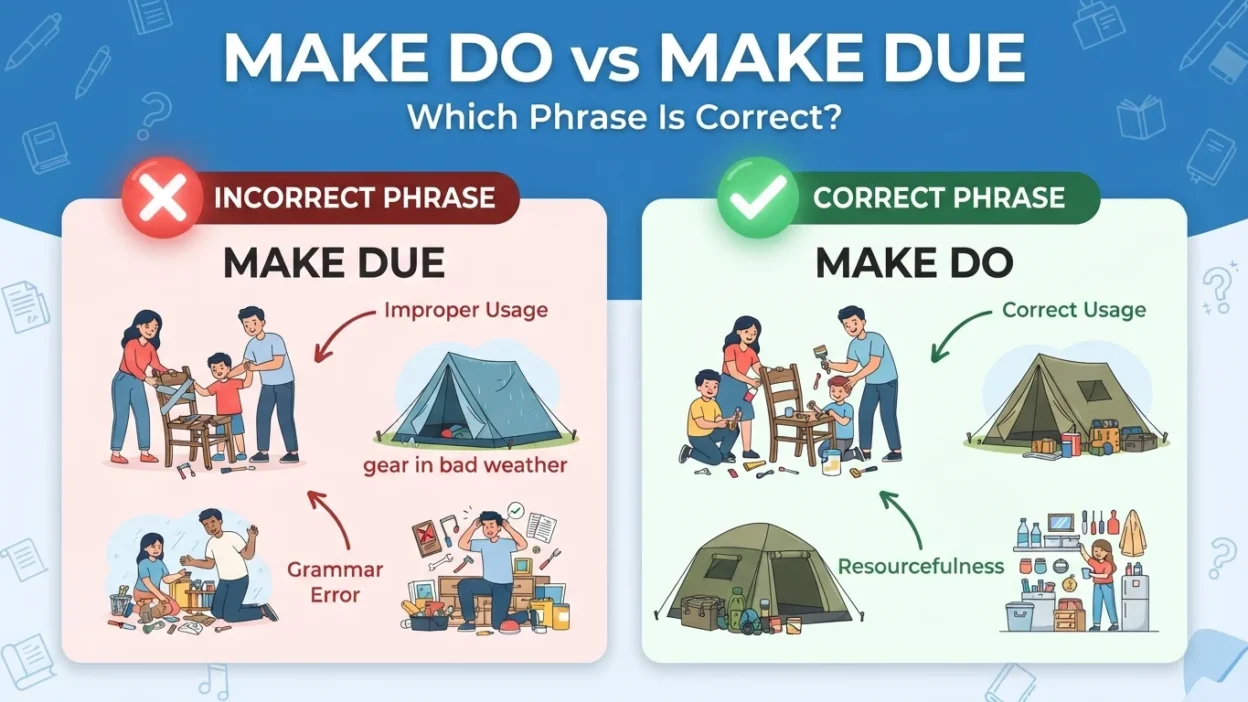
The correct phrase is “make do.” “Make due” is a common misspelling and should not be used. If you’re writing an email, essay, or business report, make do is always the right choice.
Quick Answer
- Make do = Correct.
- Make due = Incorrect.
Correct Example
- We didn’t have enough chairs, so we had to make do with stools.
Incorrect Example
- We didn’t have enough chairs, so we had to make due with stools.
What Does “Make Do” Mean?
Make do is an idiomatic phrase that means:
- manage with what you have
- get by without something better
- use available resources instead of ideal ones
- cope with a less-than-perfect situation
It is often followed by with.
Examples of Make Do in Sentences
- We’ll have to make do with instant coffee.
- They made do with a small apartment for several years.
- I forgot my charger, so I’ll make do until tomorrow.
- During the storm, the family made do with candles.
- We couldn’t afford new furniture, so we made do with the old pieces.
Is “Make Due” Correct?
No. “Make due” is not a correct English idiom.
The confusion happens because due and do are pronounced the same, but due has a different meaning related to being owed, expected, or scheduled.
Use:
- make do ✅
Never:
- make due ❌
Why Is It “Make Do”?
The phrase comes from the verb do, meaning to manage or cope.
In make do, the idea is to make things work, even when resources are limited.
The word due means things like:
- owed
- expected
- scheduled
- appropriate
It does not fit the meaning of this idiom.
Make Do vs Make Due Comparison Table
| Feature | Make Do | Make Due |
|---|---|---|
| Correct phrase | ✅ Yes | ❌ No |
| Standard English | ✅ Yes | ❌ No |
| Dictionary approved | ✅ Yes | ❌ No |
| Professional writing | ✅ Yes | ❌ No |
| Means “manage with what you have” | ✅ Yes | ❌ No |
Word Comparison
Common Uses of “Make Do”
Managing With Limited Resources
Example:
- We had to make do with borrowed equipment.
Coping Without Something Better
Example:
- She made do without air conditioning during the summer.
Using What Is Available
Example:
- The campers made do with a small tent.
Financial Situations
Example:
- Many families learned to make do during difficult times.
Common Mistakes
Writing “Due” Instead of “Do”
Incorrect:
- We’ll make due with what we have.
Correct:
- We’ll make do with what we have.
Confusing Homophones
Remember:
- do = perform, manage
- due = owed, expected, scheduled
Common Phrases
You’ll often see:
- make do with
- make do somehow
- make do without
- make do for now
Examples
- We’ll make do with what we’ve got.
- She made do without a car for years.
- They made do for the weekend.
Synonyms for Make Do
Depending on the context, you can also use:
- manage
- cope
- get by
- improvise
- get along
Example
- We managed with the supplies we had.
American vs British English Differences
There is no difference between American and British English.
Both varieties use:
- make do ✅
Neither uses:
- make due ❌
Why Correct Usage Matters
Using the correct phrase helps:
- improve readability
- strengthen professionalism
- avoid spelling errors
- communicate clearly
- build credibility
Using make due can make your writing appear less polished.
Tips to Remember the Difference
Think About the Meaning
The phrase means to manage, so it uses the verb do.
Remember What “Due” Means
Due relates to:
- due date
- payment due
- due tomorrow
It has nothing to do with managing with limited resources.
Practice With Sentences
- We’ll make do with what we have.
- They made do until better supplies arrived.
(FAQs)
Which is correct: make do or make due?
Make do is the correct phrase.
Is “make due” ever correct?
No. It is a common misspelling of make do.
What does “make do” mean?
It means to manage with the resources available or cope without something better.
Why do people write “make due”?
Because do and due sound the same, leading to a spelling mistake.
Is “make do” an idiom?
Yes. It is a common English idiom.
Can I say “make do with”?
Yes. In fact, make do with is the most common form.
Is “make do” used in British and American English?
Yes. It is standard in both.
How can I remember the correct phrase?
Think:
- Make do = Do your best with what you have.
Final Summary
The difference between make do vs make due is simple. Make do is the correct idiomatic expression meaning to manage with available resources. Make due is a misspelling and should not be used in standard English.
Whenever you need to express the idea of coping with less or using what’s available, make do is always the correct phrase.
Actionable Takeaway
Whenever you mean “manage with what you have,” write:
- make do ✅
Never write:
- make due ❌
Memory trick:
- Make do = Do your best.
- Due = Due date or payment due.