If you’ve ever wondered if “relieving” or “reliving” is the correct word, you’re not alone. These two words look and sound similar, but they have very different meanings.
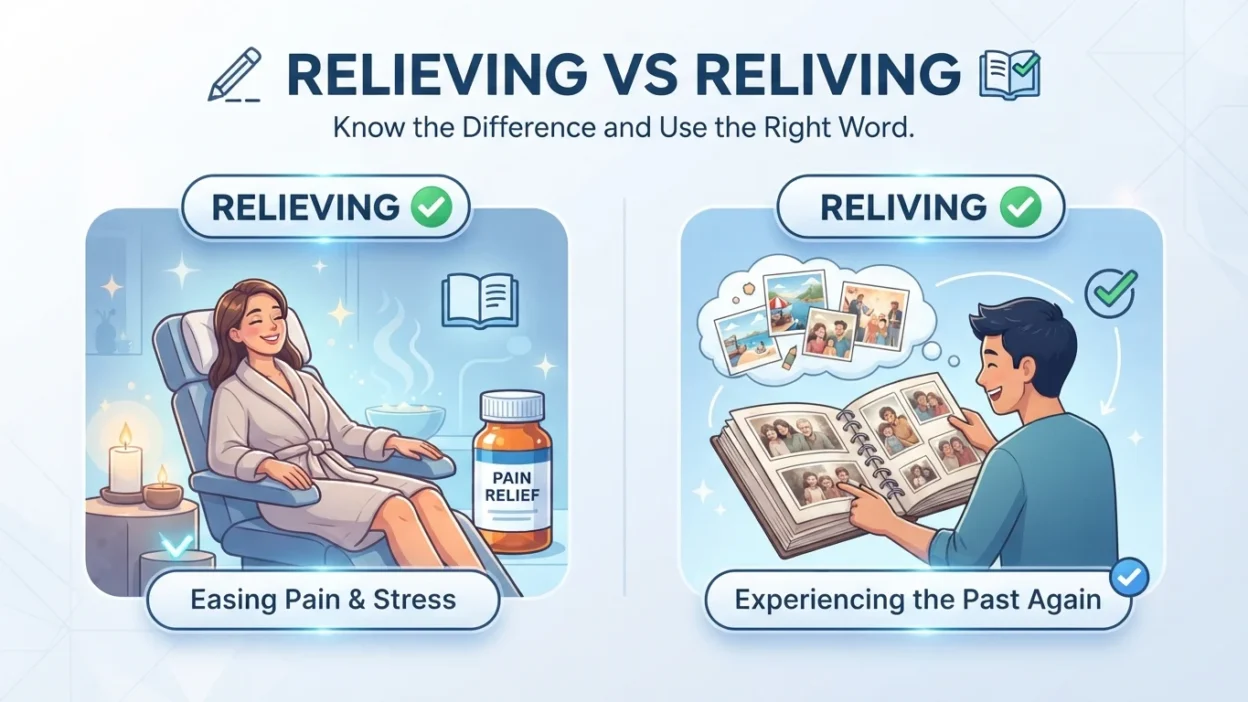
Relieving refers to reducing pain, stress, or responsibility, while reliving means experiencing something again in your mind or memory. Understanding the difference between relieving vs reliving will help you avoid common writing mistakes.
Quick Answer
- Relieving = Easing pain, stress, discomfort, or responsibility.
- Reliving = Experiencing a past event again through memory or imagination.
Correct Examples
- A hot bath can be relieving after a long day.
- She kept reliving the happiest moments of her childhood.
What Does Relieving Mean?
Relieving is the present participle of relieve.
It means:
- reducing pain or discomfort
- easing stress or anxiety
- removing a burden or responsibility
- providing comfort
Examples of Relieving in Sentences
- The medicine is relieving his headache.
- Talking to a friend can be relieving during stressful times.
- The cool breeze was relieving after the hike.
- The manager is relieving the team of extra duties.
- Deep breathing is relieving tension.
What Does Reliving Mean?
Reliving is the present participle of relive.
It means:
- remembering and mentally experiencing a past event again
- revisiting memories emotionally
- imagining a previous experience as if it were happening again
Examples of Reliving in Sentences
- She enjoys reliving her childhood memories.
- He couldn’t stop reliving the championship game.
- Watching the old videos felt like reliving the moment.
- They spent the evening reliving their college days.
- The documentary had survivors reliving difficult experiences.
Relieving vs Reliving Comparison Table
| Feature | Relieving | Reliving |
|---|---|---|
| Means easing pain or stress | ✅ Yes | ❌ No |
| Means experiencing memories again | ❌ No | ✅ Yes |
| Comes from | Relieve | Relive |
| Used for emotions and comfort | ✅ Yes | Sometimes |
| Used for memories | ❌ No | ✅ Yes |
Word Comparison
When to Use Relieving
Use relieving when talking about:
- reducing pain
- lowering stress
- easing pressure
- providing comfort
- removing responsibility
Examples
- The massage was very relieving.
- The medication is relieving the symptoms.
- Sharing your worries can be relieving.
When to Use Reliving
Use reliving when referring to:
- memories
- past experiences
- nostalgic moments
- emotional recollections
Examples
- He was reliving the events of that day.
- They spent hours reliving old adventures.
- Looking through photo albums is like reliving the past.
Common Mistakes
Using Relieving for Memories
Incorrect:
- She was relieving her childhood memories.
Correct:
- She was reliving her childhood memories.
Using Reliving for Pain Relief
Incorrect:
- This cream is reliving muscle pain.
Correct:
- This cream is relieving muscle pain.
Common Phrases
Relieving
- relieving pain
- relieving stress
- relieving pressure
- relieving symptoms
- relieving anxiety
Reliving
- reliving memories
- reliving the past
- reliving childhood
- reliving the experience
- reliving happy moments
Synonyms
Synonyms for Relieving
- easing
- soothing
- reducing
- comforting
- alleviating
Synonyms for Reliving
- remembering
- recalling
- revisiting
- reminiscing about
- experiencing again
American vs British English Differences
There is no difference in spelling or meaning.
Both American and British English use:
- relieving for easing pain or stress.
- reliving for experiencing memories again.
Why Correct Word Choice Matters
Choosing the correct word helps:
- improve clarity
- avoid misunderstandings
- strengthen professionalism
- express emotions accurately
- enhance readability
Tips to Remember the Difference
Relieving = Relief
Think:
- Relieving → Relief → Reducing pain or stress
Reliving = Live Again
Notice that reliving contains live, reminding you that you’re living through an experience again.
Easy Memory Trick
- Relieving = Relief
- Reliving = Live Again
Frequently Asked Questions (FAQs)
What is the difference between relieving and reliving?
Relieving means easing pain, stress, or discomfort, while reliving means experiencing a past event again in your memory.
Which is correct: relieving or reliving?
Both are correct, but they are used in different contexts.
Can I say “reliving pain”?
Yes. If you mean remembering or mentally experiencing painful events again, reliving pain is correct.
Can I say “relieving memories”?
Generally, no. If you’re talking about remembering past events, use reliving memories. If you mean that memories bring comfort, you could say the memories were relieving or, more naturally, the memories were comforting.
What does relieving stress mean?
It means reducing or easing stress.
What does reliving the past mean?
It means mentally experiencing past events again through memory or reflection.
Is there any difference between American and British English?
No. Both varieties use these words in the same way.
How can I remember the difference?
Think:
- Relieving = Relief
- Reliving = Live Again
Final Summary
The difference between relieving vs reliving is simple. Relieving refers to easing pain, stress, discomfort, or responsibility, while reliving means experiencing a past event again through memory or imagination.
Choosing the right word will make your writing clearer, more accurate, and easier to understand.
Actionable Takeaway
Use:
- relieving ✅ when talking about easing pain, stress, or burdens.
- reliving ✅ when talking about remembering or experiencing past events again.
Memory trick:
- Relieving = Relief
- Reliving = Live Again