If you’ve ever wondered whether “alterior” or “ulterior” is the correct spelling, you’re not alone. Because the words sound similar, many people mistakenly write alterior instead of ulterior. However, only one is correct in standard English.
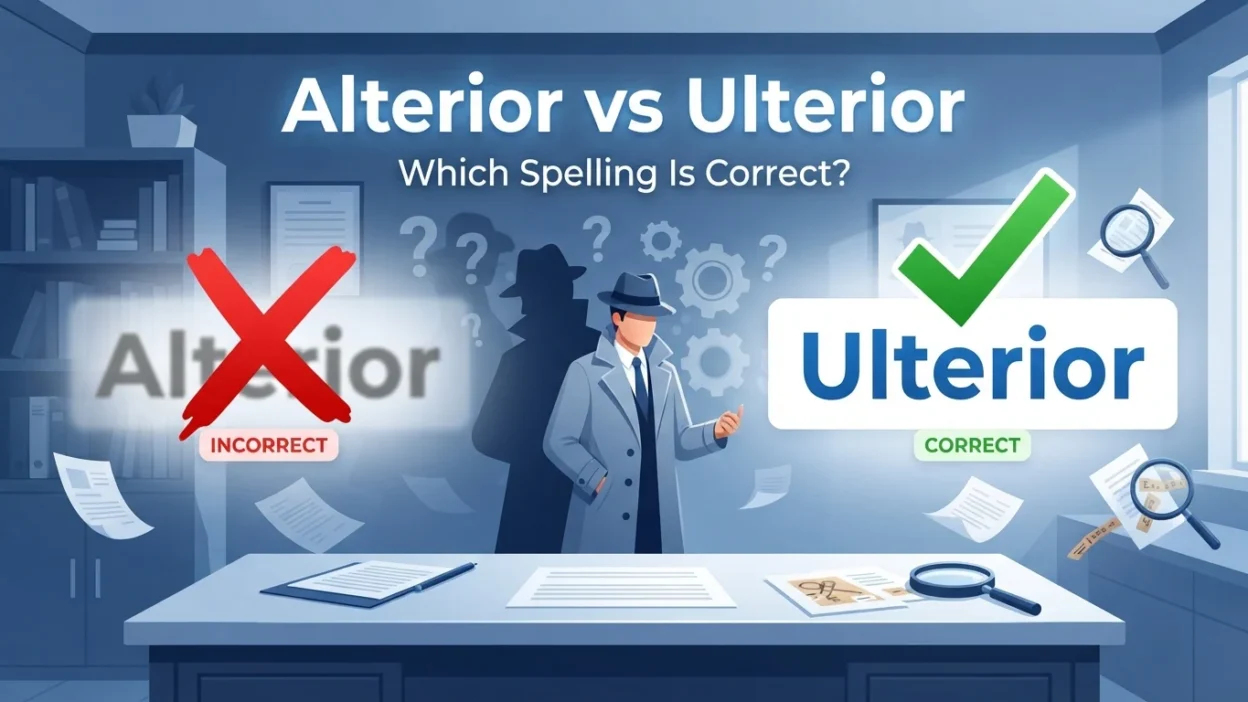
The correct spelling is “ulterior.” “Alterior” is a misspelling and is not recognized in standard English. If you’re writing an essay, email, report, or article, ulterior is always the right choice.
Quick Answer
Ulterior is the correct spelling.
Alterior is incorrect and should not be used.
Correct Example
- She seemed kind, but I suspected she had an ulterior motive.
Incorrect Example
- She seemed kind, but I suspected she had an alterior motive.
What Does Ulterior Mean?
Ulterior is an adjective that means:
- hidden or secret
- beyond what is openly stated
- existing beneath the surface
- not immediately obvious
It is most often used to describe a concealed intention or purpose.
Examples of Ulterior in Sentences
- He offered to help, but I wondered if he had an ulterior motive.
- The company denied having any ulterior agenda.
- She had no ulterior reason for her generosity.
- His friendly behavior masked an ulterior purpose.
- They acted without any ulterior intentions.
Is Alterior a Real Word?
No. Alterior is not a recognized English word.
It is simply a common spelling mistake caused by confusing the first letters of ulterior or by mixing it with words like alternative or alter.
Major English dictionaries recognize only:
- ulterior
Not:
- alterior
Why Is It Spelled “Ulterior”?
The word ulterior comes from the Latin ulterior, meaning “further,” “beyond,” or “more distant.”
Over time, it developed the figurative meaning of hidden or not immediately apparent, which explains why it’s commonly paired with words like motive, purpose, and agenda.
Alterior vs Ulterior Comparison Table
| Feature | Ulterior | Alterior |
|---|---|---|
| Correct spelling | ✅ Yes | ❌ No |
| Dictionary word | ✅ Yes | ❌ No |
| Standard English | ✅ Yes | ❌ No |
| Academic writing | ✅ Yes | ❌ No |
| Professional writing | ✅ Yes | ❌ No |
Word Comparison
Common Mistakes With Ulterior
Starting the Word With “Al-“
Incorrect:
- They had an alterior motive.
Correct:
- They had an ulterior motive.
Confusing Similar-Sounding Words
People often confuse ulterior with:
- alter
- alternative
- alteration
These words are unrelated in meaning and spelling.
Guessing the Spelling
Because ulterior is less common in everyday conversation, many people rely on pronunciation and accidentally write alterior.
Different Uses of Ulterior
Hidden Motives
Example:
- She had no ulterior motive for helping.
Secret Plans
Example:
- The proposal concealed an ulterior agenda.
Personal Intentions
Example:
- His apology came with an ulterior purpose.
Business
Example:
- Investors questioned the company’s ulterior intentions.
Common Phrases Using Ulterior
Ulterior Motive
Meaning: a hidden reason for doing something.
Example:
- I suspected an ulterior motive behind his generosity.
Ulterior Purpose
Example:
- They insisted there was no ulterior purpose.
Ulterior Agenda
Example:
- The committee denied having an ulterior agenda.
Ulterior Intentions
Example:
- Her actions were free from ulterior intentions.
Synonyms for Ulterior
Depending on the context, you can also use:
- hidden
- secret
- concealed
- covert
- underlying
Example
- They had a hidden motive for changing the agreement.
Opposites of Ulterior
Common antonyms include:
- honest
- open
- transparent
- straightforward
- sincere
Example
- His intentions were completely transparent.
American vs British English Differences
There is no difference between American and British English.
Both use:
- ulterior ✅
Neither uses:
- alterior ❌
Why Correct Spelling Matters
Correct spelling helps:
- improve readability
- strengthen professionalism
- build credibility
- communicate clearly
- avoid confusion
Using alterior instead of ulterior may make your writing appear less polished.
Tips to Remember the Correct Spelling
Remember the Common Phrase
Think of:
- ulterior motive
This is the phrase you’ll see most often.
Remember It Starts With “U”
A simple memory trick:
- Ulterior = Underlying motive.
Practice With Sentences
- She had an ulterior motive.
- The company denied any ulterior agenda.
(FAQs)
Which spelling is correct: alterior or ulterior?
Ulterior is the correct spelling.
Is alterior a real word?
No. It is a common misspelling.
What does ulterior mean?
It means hidden, secret, or beyond what is openly stated.
What is an ulterior motive?
An ulterior motive is a hidden or concealed reason for doing something.
Is ulterior used in both British and American English?
Yes. The spelling is identical in both varieties of English.
Can ulterior have a positive meaning?
Yes, although it is often used when suggesting a hidden motive that may be suspicious or self-serving.
What are common synonyms for ulterior?
Hidden, concealed, secret, covert, and underlying.
How can I remember the correct spelling?
Remember the phrase:
- ulterior motive
And think:
- U = Underlying.
Final Summary
The difference between alterior vs ulterior is simple. Ulterior is the correct spelling and refers to a hidden or secret motive, purpose, or intention. Alterior is a common misspelling and should never be used in standard English.
If you’re writing about personal motives, business decisions, or hidden agendas, ulterior is always the correct choice.
Actionable Takeaway
Whenever you mean hidden or secret intention, write:
- ulterior ✅
Never write:
- alterior ❌
A simple memory trick:
Think of the phrase ulterior motive and remember:
- U = Underlying motive.