If you’ve ever wondered whether “sneaked” or “snuck” is the correct past tense of sneak, you’re not alone. Both words are correct, but their usage depends on style, region, and level of formality.
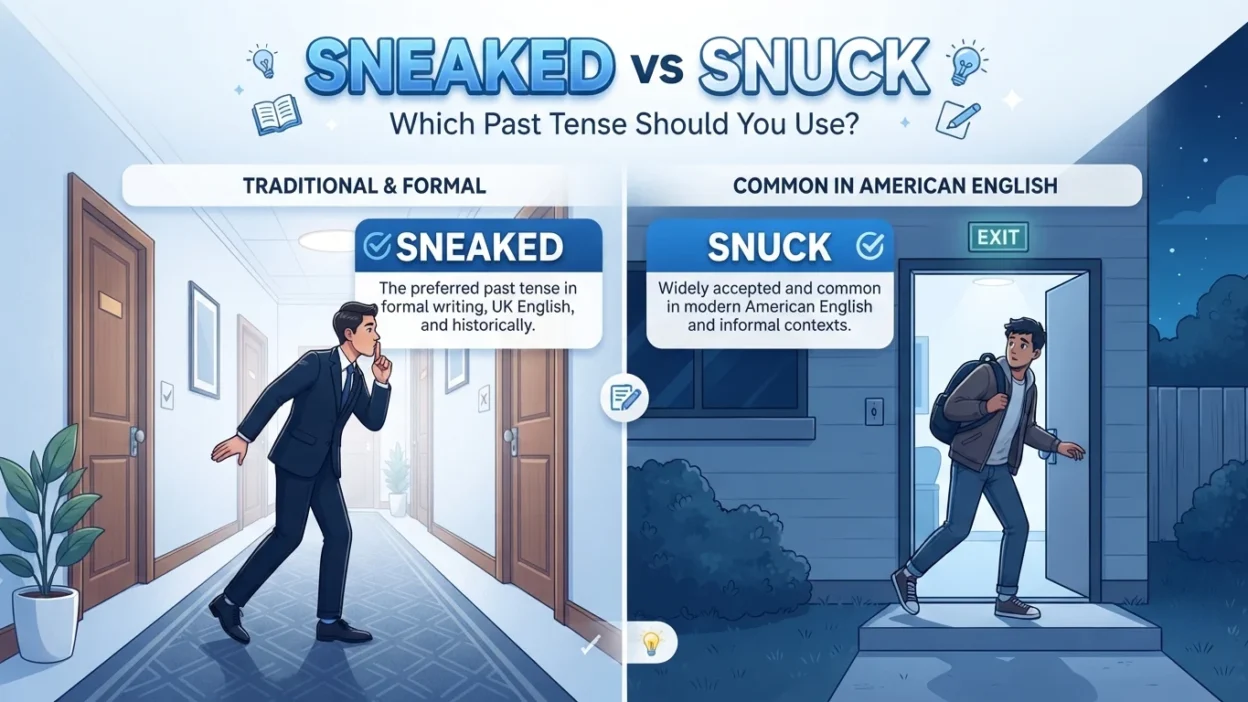
Sneaked is the traditional past tense and past participle of sneak, while snuck is a newer form that has become widely accepted, especially in American English.
Today, both forms are considered standard, although sneaked is generally preferred in formal writing.
Quick Answer
- Sneaked = Traditional and widely accepted past tense of sneak.
- Snuck = Also correct; very common in informal American English.
Correct Examples
- She sneaked into the room quietly.
- He snuck out before sunrise.
What Does “Sneak” Mean?
Sneak is a verb meaning:
- to move quietly or secretly
- to avoid being noticed
- to do something in a hidden or dishonest way
Examples of Sneak in Sentences
- The cat tried to sneak into the kitchen.
- They planned to sneak away after dinner.
- Someone sneaked a note onto my desk.
- He snuck into the theater without a ticket.
- The children tried to sneak cookies before dinner.
What Does Sneaked Mean?
Sneaked is the traditional past tense and past participle of sneak.
It is commonly preferred in:
- formal writing
- academic writing
- professional communication
- many British English publications
Examples of Sneaked in Sentences
- She sneaked out after everyone was asleep.
- They sneaked into the concert unnoticed.
- The dog sneaked into the bedroom.
- He had sneaked away before the meeting ended.
- Someone sneaked a gift into my bag.
What Does Snuck Mean?
Snuck is an alternative past tense and past participle of sneak.
It is especially common in:
- everyday conversation
- American English
- fiction and dialogue
- informal writing
Examples of Snuck in Sentences
- He snuck out through the back door.
- We snuck into the stadium.
- She snuck a glance at the answers.
- They had snuck away before anyone noticed.
- The child snuck another cookie.
Sneaked vs Snuck Comparison Table
| Feature | Sneaked | Snuck |
|---|---|---|
| Correct spelling | ✅ Yes | ✅ Yes |
| Traditional past tense | ✅ Yes | ❌ No |
| Common in American English | ✅ Yes | ✅ Very common |
| Preferred in formal writing | ✅ Yes | Less often |
| Accepted in modern English | ✅ Yes | ✅ Yes |
Word Comparison
When to Use Sneaked
Use sneaked when:
- writing formally
- following traditional grammar
- writing academic or business documents
Examples
- The reporter sneaked into the building.
- The children had sneaked outside.
When to Use Snuck
Use snuck when:
- writing dialogue
- speaking casually
- using informal American English
Examples
- He snuck into the movie.
- She snuck a quick look at her phone.
Common Mistakes
Thinking “Snuck” Is Incorrect
Many people believe snuck is wrong, but modern dictionaries recognize it as a standard past tense of sneak, especially in American English.
Mixing Formal and Informal Styles
If you’re writing an academic paper or business report, sneaked is usually the safer choice.
Common Phrases
Sneaked
- sneaked away
- sneaked in
- sneaked out
- sneaked past
- sneaked a look
Snuck
- snuck out
- snuck in
- snuck away
- snuck a peek
- snuck past
Synonyms
Synonyms for Sneaked / Snuck
- crept
- slipped
- tiptoed
- sneaked quietly
- moved secretly
American vs British English Differences
American English
- Snuck is very common and fully accepted.
- Sneaked is also correct.
British English
- Sneaked is generally preferred.
- Snuck is understood and increasingly used, but it is less common than in American English.
Why Correct Word Choice Matters
Choosing the right form helps:
- match your audience
- maintain the appropriate level of formality
- improve readability
- sound natural
Tips to Remember the Difference
Sneaked = Traditional
Use sneaked when you want the safest option for formal writing.
Snuck = Casual
Think of snuck as the conversational alternative, especially in American English.
Easy Memory Trick
- Formal → Sneaked
- Casual → Snuck
(FAQs)
What is the difference between sneaked and snuck?
Both are correct past tense forms of sneak. Sneaked is the traditional form, while snuck is a newer form that is especially common in American English.
Which is grammatically correct: sneaked or snuck?
Both are grammatically correct.
Is snuck a real word?
Yes. Modern dictionaries recognize snuck as a standard past tense and past participle of sneak.
Which form is better for formal writing?
Sneaked is generally preferred in formal and academic writing.
Is snuck only used in American English?
No. It is understood in British English as well, but it is much more common in American English.
Can I use either form in conversation?
Yes. Both are acceptable, though snuck is more common in casual speech.
Is “had snuck” correct?
Yes. Had snuck is a correct past participle in modern English.
How can I remember the difference?
Think:
- Sneaked = Formal
- Snuck = Informal American English
Final Summary
The difference between sneaked vs snuck is mainly one of style and regional preference. Sneaked is the traditional and more formal past tense of sneak, while snuck is a widely accepted alternative that is especially common in American English.
If you’re writing formally, choose sneaked. In everyday conversation, either form is acceptable.
Actionable Takeaway
Use:
- sneaked ✅ for formal, academic, or professional writing.
- snuck ✅ for casual conversation and informal American English.
Memory trick:
- Sneaked = Traditional
- Snuck = Casual