If you have ever typed “vender” and wondered if it should actually be “vendor,” you are not alone. These two words look nearly identical, sound the same, and often confuse writers, students, business owners, and even native English speakers. The good news is that the difference is simple once you understand how each word is used.
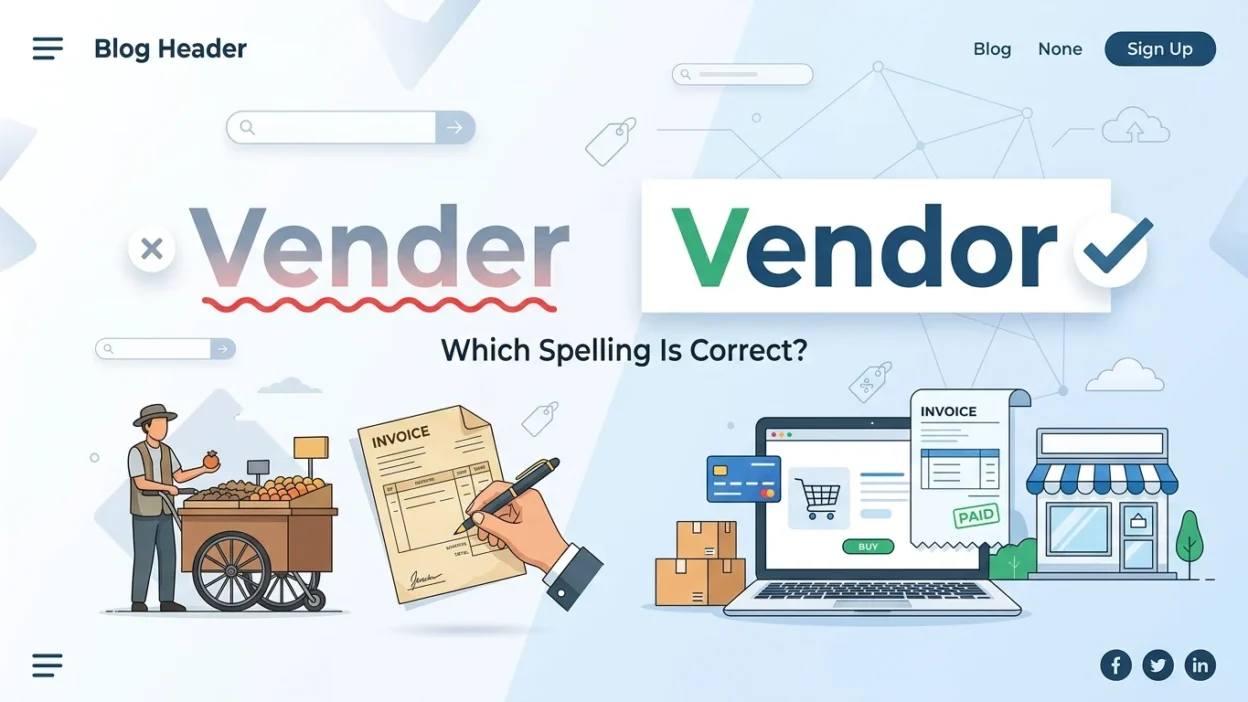
In modern English, “vendor” is the standard and most widely accepted spelling, especially in business, technology, eCommerce, and everyday communication. Meanwhile, “vender” exists as a less common alternative spelling that appears mostly in older texts or specific dictionaries. Knowing when to use each term can help your writing look more professional and accurate.
Quick Answer
“Vendor” is the preferred and correct spelling in modern English.
“Vender” is an older or less common variant that is rarely used today.
Use “vendor” in:
- Business writing
- Online stores
- Contracts
- Technology
- Academic writing
- Everyday communication
Example:
- Correct: The vendor delivered the products on time.
- Less common: The vender delivered the products on time.
What Does Vendor Mean?
A vendor is a person or company that sells goods or services. The word is commonly used in business, retail, commerce, technology, and finance.
Simple Definition
A vendor = a seller or supplier.
Examples:
- A street food vendor sells snacks.
- A software vendor provides digital tools.
- A wedding vendor supplies decorations or catering.
- Online vendors sell products through websites.
The word “vendor” is extremely common in:
- Business English
- eCommerce
- Real estate
- Supply chain management
- Procurement
- IT and software industries
What Does Vender Mean?
“Vender” is simply a less common spelling variation of “vendor.” While some dictionaries recognize it, it is rarely used in modern English writing.
In most cases, using “vender” may appear outdated or incorrect to readers.
Example
- Rare form: The vender supplied fresh vegetables.
- Preferred form: The vendor supplied fresh vegetables.
Today, “vendor” dominates in books, websites, contracts, and professional communication.
Vender vs Vendor: Main Difference
| Feature | Vendor | Vender |
|---|---|---|
| Modern usage | Very common | Rare |
| Preferred spelling | Yes | No |
| Business English | Standard | Uncommon |
| Professional writing | Recommended | Usually avoided |
| Dictionaries | Accepted | Sometimes accepted |
| Everyday communication | Widely used | Rarely seen |
Why “Vendor” Is More Popular
The spelling “vendor” became standardized over time because it aligns more naturally with related English and Latin word forms.
Today, major industries use “vendor,” including:
- Technology companies
- Retail businesses
- Government contracts
- Online marketplaces
- Corporate procurement systems
You will commonly see phrases such as:
- Approved vendor
- Vendor management
- Vendor contract
- Vendor registration
- Vendor payment
- Preferred vendor
These phrases almost never use “vender.”
Is Vendor American or British English?
Interestingly, both American English and British English strongly prefer the spelling “vendor.”
Unlike some words that change spelling between regions, such as:
- Color vs colour
- Organize vs organise
The word “vendor” stays mostly the same in both varieties of English.
American English
In the United States, “vendor” is the standard spelling in:
- Business documents
- Legal contracts
- Software industries
- Online marketplaces
British English
In British English, “vendor” is also commonly used, although “seller” or “supplier” may sometimes appear instead depending on context.
Still, “vendor” remains the dominant spelling.
Common Contexts Where Vendor Is Used
Business and Commerce
Businesses often work with vendors who supply products or services.
Example:
- The company selected a new vendor for office equipment.
Technology
Software vendors provide applications, cloud platforms, and IT services.
Example:
- The software vendor released a security update.
Events and Weddings
Event vendors may include photographers, caterers, florists, and decorators.
Example:
- We hired several wedding vendors for the ceremony.
Street Selling
A street vendor sells food, drinks, or merchandise in public areas.
Example:
- The street vendor sold fresh fruit.
Common Mistakes People Make
Using “Vender” in Professional Writing
Many people accidentally use “vender” because it sounds correct phonetically.
However, using it in:
- resumes
- business emails
- blog posts
- academic papers
- contracts
can look outdated or mistaken.
Spellcheck Errors
Some spellcheck tools may not flag “vender” because it technically exists in certain dictionaries. Still, professional editors usually recommend “vendor.”
Confusing Vendor With Vending
People sometimes assume “vender” is correct because of related words like:
- vending machine
- vending business
But the noun form commonly remains “vendor.”
Correct:
- vending machine
- food vendor
Not commonly used:
- food vender
Vendor Synonyms
Depending on context, you can also use related words such as:
- seller
- supplier
- merchant
- retailer
- trader
- provider
- distributor
However, each word has slightly different meanings.
For example:
- A supplier usually provides goods to businesses.
- A retailer sells directly to customers.
- A vendor may do both depending on the situation.
Examples of Vendor in Sentences
Here are some natural examples using the preferred spelling.
Business Examples
- The vendor submitted the invoice yesterday.
- We compared prices from several vendors.
- Our company works with international vendors.
Technology Examples
- The cloud vendor improved data security.
- The software vendor offers customer support.
Everyday Examples
- A local vendor sold handmade jewelry.
- The food vendor attracted a long line of customers.
Should You Ever Use “Vender”?
In modern writing, it is usually better to avoid “vender” unless:
- You are quoting historical text
- You are following a very old style guide
- You intentionally want archaic language
For nearly all modern situations, “vendor” is the safer and more professional choice.
Grammar and Pronunciation
Both “vendor” and “vender” are pronounced the same way:
/VEN-der/
Because the pronunciation is identical, spelling confusion is common.
Singular and Plural Forms
| Form | Example |
|---|---|
| Singular | vendor |
| Plural | vendors |
Example:
- The vendors displayed products at the market.
SEO and Digital Marketing Usage
In SEO, eCommerce, and digital marketing, “vendor” is overwhelmingly more searched and recognized.
Common search phrases include:
- vendor management software
- online vendor portal
- marketplace vendors
- vendor registration form
- vendor services
- approved vendor list
Using “vendor” improves:
- readability
- professionalism
- search engine relevance
- audience trust
Vendor in Legal and Business Documents
Legal contracts nearly always use “vendor.”
Examples:
- Vendor agreement
- Vendor license
- Vendor obligations
- Vendor payment terms
Using “vender” in legal documents may confuse readers or appear inconsistent.
FAQs
Is “vender” a real word?
Yes, “vender” is recognized in some dictionaries as a variant spelling of “vendor.” However, it is rarely used today.
Which spelling is correct: vendor or vender?
“Vendor” is the standard and preferred spelling in modern English.
Do Americans use “vender”?
Almost never. American English strongly favors “vendor.”
Is “vendor” used in British English too?
Yes. British English also commonly uses “vendor,” especially in business contexts.
Why do people spell it “vender”?
People often spell it that way because it sounds similar to words like “vending” or because they are spelling based on pronunciation.
Should I use “vender” in professional writing?
No. It is best to use “vendor” in professional, academic, and business writing.
What is a vendor in business?
A vendor is a person or company that sells products or services to customers or other businesses.
Is a supplier the same as a vendor?
Not exactly. A supplier provides goods, while a vendor specifically sells them. In some contexts, the terms overlap.
Final Summary
The debate around vender vs vendor is simpler than it first appears. While both spellings technically exist, “vendor” is the modern, standard, and widely accepted version used across business, technology, retail, and everyday English. It appears in professional writing, legal contracts, software industries, and online marketplaces around the world.
Although “vender” may still appear occasionally in historical texts or certain dictionaries, it is considered uncommon and outdated in modern usage. If you want your writing to sound polished, professional, and trustworthy, choosing “vendor” is almost always the best option.
Actionable Takeaway
Whenever you write emails, articles, contracts, resumes, or business content, use “vendor” instead of “vender.” This ensures your writing matches current English standards, improves readability, and creates a more professional impression for readers and search engines alike.