English contractions can sometimes create confusion, especially when apostrophes are involved. One common mistake many writers make is typing “havnt” or “havent” instead of the correct form. Since these spellings appear frequently in texts, social media posts, and casual conversations, people often wonder which version is actually correct.
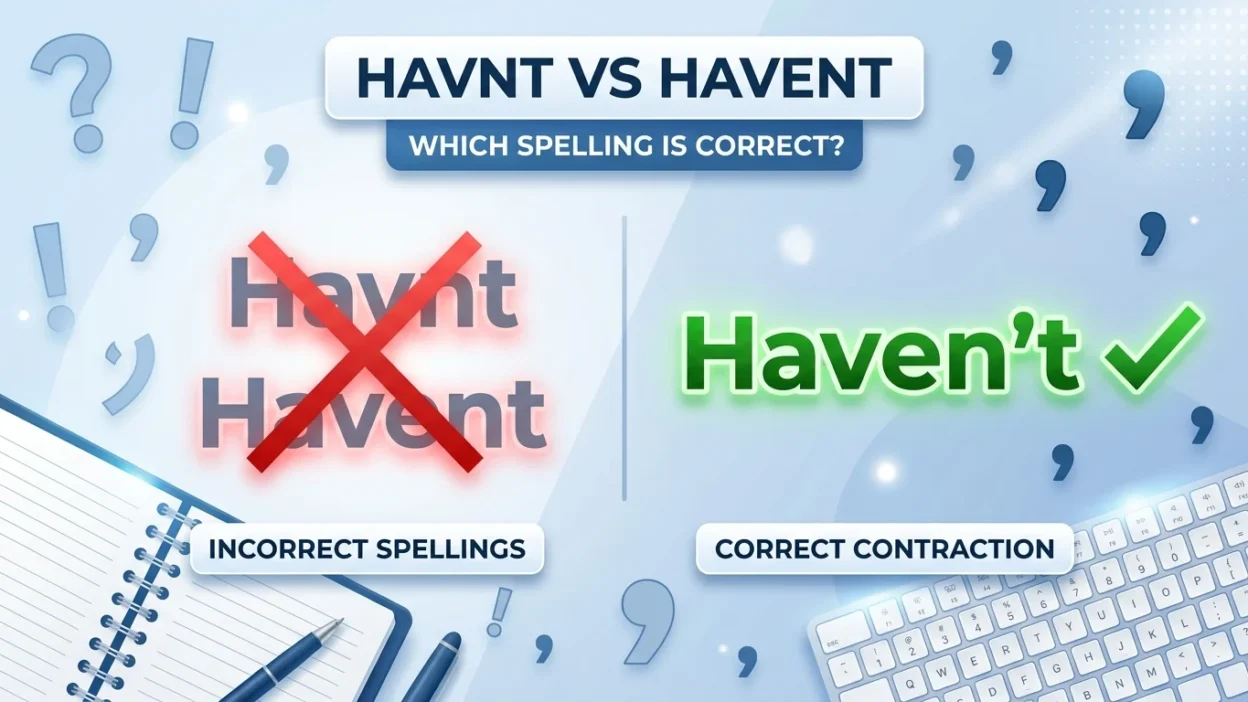
The truth is simple: neither “havnt” nor “havent” is correct in standard English. The proper contraction is “haven’t” with an apostrophe. Understanding why the apostrophe matters can help improve your grammar, writing accuracy, and professionalism in everyday communication.
Quick Answer
Neither “havnt” nor “havent” is correct.
The correct spelling is:
- haven’t
Correct Example
- I haven’t finished my homework yet.
Incorrect Examples
- I havent finished my homework yet.
- I havnt finished my homework yet.
What Does Haven’t Mean?
“Haven’t” is a contraction of:
- have not
It is commonly used in spoken and written English.
Examples of Haven’t in Sentences
- We haven’t seen that movie.
- They haven’t arrived yet.
- I haven’t eaten breakfast today.
- You haven’t answered my question.
- She said they haven’t decided yet.
Why Are Havnt and Havent Incorrect?
Both spellings are missing something important.
Havent
“Havent” is incorrect because it lacks the apostrophe needed in contractions.
Havnt
“Havnt” is incorrect because:
- it removes the vowel “e”
- it also lacks the apostrophe
Neither form follows standard English grammar rules.
Correct Contraction Rule
English contractions combine words while replacing omitted letters with an apostrophe.
Correct Formation
have not=haven’t
Havnt vs Havent vs Haven’t Comparison Table
| Word | Correct? | Explanation |
|---|---|---|
| haven’t | Yes | proper contraction |
| havent | No | missing apostrophe |
| havnt | No | missing apostrophe and vowel |
Why People Write Havent or Havnt
The mistake commonly happens because:
- people type quickly
- apostrophes are skipped in casual texting
- autocorrect sometimes misses errors
- informal online writing ignores punctuation
However, in professional or academic writing, the correct form is always:
- haven’t
Common Uses of Haven’t
Talking About Unfinished Actions
Example:
- I haven’t completed the report.
Describing Missing Experiences
Example:
- They haven’t visited Paris before.
Expressing Negative Statements
Example:
- We haven’t heard the news yet.
Common Mistakes With Haven’t
Forgetting the Apostrophe
Incorrect:
- We havent started yet.
Correct:
- We haven’t started yet.
Removing Letters Incorrectly
Incorrect:
- I havnt seen him.
Correct:
- I haven’t seen him.
Using Informal Texting Habits
People often shorten contractions in casual chats, but formal writing requires proper grammar.
Why Apostrophes Matter
Apostrophes help show:
- missing letters in contractions
- ownership in possessives
Without apostrophes, words may appear incomplete or grammatically incorrect.
Similar Contractions
| Full Form | Correct Contraction |
|---|---|
| do not | don’t |
| cannot | can’t |
| will not | won’t |
| have not | haven’t |
| is not | isn’t |
American vs British English Differences
There is no spelling difference between American and British English for this contraction.
Both use:
- haven’t
Neither standard variety uses:
- havent
- havnt
Why Correct Spelling Matters
Using correct grammar improves:
- professionalism
- readability
- communication clarity
- writing confidence
- credibility
Mistakes like “havnt” may:
- distract readers
- weaken authority
- appear careless
Common Phrases Using Haven’t
Haven’t Seen
Example:
- I haven’t seen that show yet.
Haven’t Heard
Example:
- We haven’t heard from him recently.
Haven’t Finished
Example:
- They haven’t finished the project.
Haven’t Decided
Example:
- She hasn’t decided which option to choose.
Tips to Remember the Correct Spelling
Always Use the Apostrophe
Remember:
- haven’t = have not
Think About Missing Letters
The apostrophe replaces the missing:
- o
from:
- not
Avoid Texting Shortcuts
Casual shortcuts like:
- havent
- havnt
should not appear in professional writing.
FAQs
Is havnt a real word?
No. “Havnt” is incorrect in standard English.
Is havent correct without an apostrophe?
No. The correct spelling is “haven’t.”
Why does haven’t need an apostrophe?
Because it is a contraction of “have not.”
What does haven’t mean?
It means:
- have not
Is haven’t used in both British and American English?
Yes. Both varieties use “haven’t.”
Can I use havent in texting?
People sometimes use it informally, but it is grammatically incorrect.
What is the full form of haven’t?
The full form is:
- have not
Why do people write havnt?
Usually because of fast typing or skipped punctuation.
Final Summary
The difference between havnt vs havent is actually simple because neither spelling is correct in standard English. The proper form is “haven’t,” which is the contraction of “have not.” Both “havnt” and “havent” are considered grammar mistakes because they either remove letters incorrectly or omit the apostrophe.
Whether you are writing emails, essays, blog posts, or social media captions, using “haven’t” correctly helps your writing appear polished, professional, and trustworthy. Small grammar details like apostrophes can make a big difference in communication quality and reader confidence.
Actionable Takeaway
Whenever you shorten “have not,” always write:
- haven’t
Remember:
- include the apostrophe
- avoid “havnt”
- avoid “havent”
Keeping this simple grammar rule in mind will instantly improve your English writing accuracy.