If you’ve ever wondered if “apologizes” or “apologies” is the correct word, you’re not alone. These words are closely related, but they belong to different parts of speech and are used in different situations.
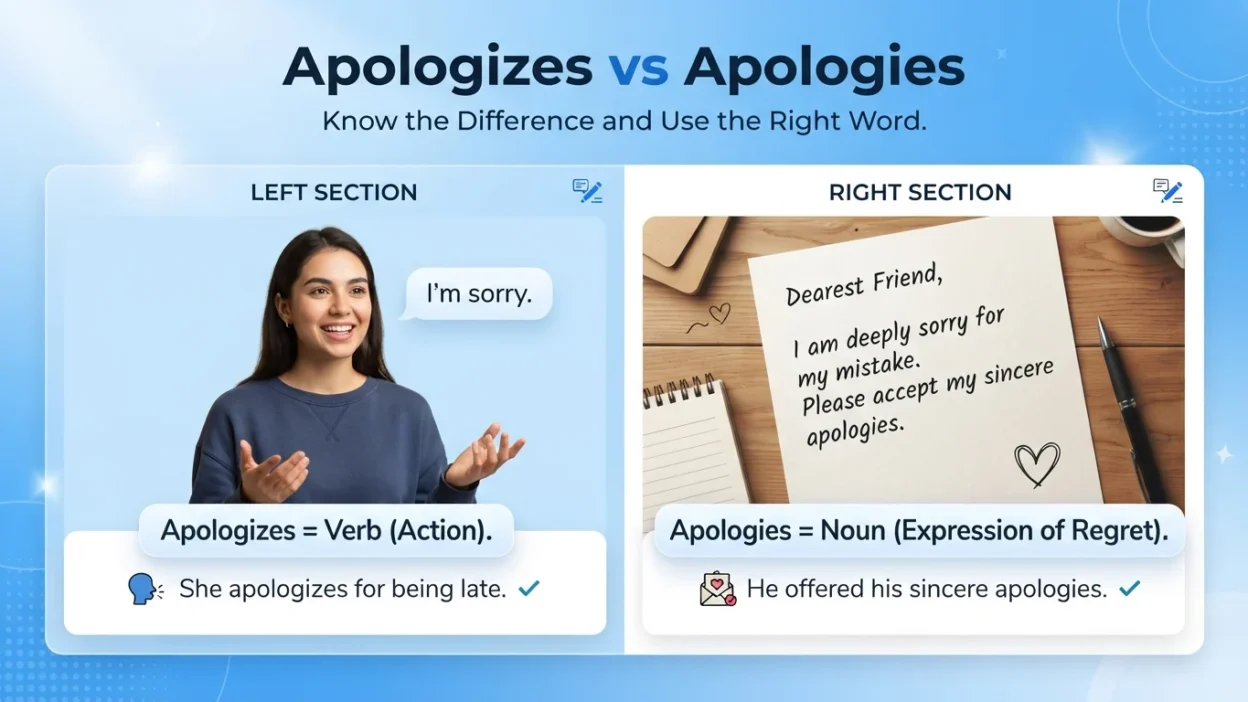
Apologizes is a verb meaning says sorry or expresses regret. Apologies is the plural noun of apology, referring to expressions of regret or statements of remorse. Understanding the difference between apologizes vs apologies will help you use each word correctly in speech and writing.
Quick Answer
- Apologizes = A verb meaning expresses regret or says sorry. ✅
- Apologies = A plural noun meaning expressions of regret or statements of remorse. ✅
Correct Examples
- He apologizes whenever he makes a mistake.
- Please accept my sincere apologies.
What Does “Apologizes” Mean?
Apologizes is the third person singular present tense of the verb apologize.
It means:
- to say sorry
- to express regret
- to admit fault politely
Examples of Apologizes in Sentences
- She apologizes for arriving late.
- He always apologizes when he interrupts.
- The company apologizes for the inconvenience.
- My brother apologizes whenever he forgets something.
- She apologizes sincerely after making a mistake.
What Does “Apologies” Mean?
Apologies is the plural form of the noun apology.
It refers to:
- multiple expressions of regret
- formal statements of apology
- a polite way to say “I’m sorry”
Examples of Apologies in Sentences
- Please accept my sincere apologies.
- We offer our apologies for the delay.
- His apologies were heartfelt.
- The airline issued public apologies.
- My apologies for the misunderstanding.
Apologizes vs Apologies Comparison Table
| Feature | Apologizes | Apologies |
|---|---|---|
| Part of speech | Verb | Noun (plural) |
| Means “says sorry” | ✅ Yes | ❌ No |
| Refers to expressions of regret | ❌ No | ✅ Yes |
| Used with a subject (he/she/company) | ✅ Yes | ❌ No |
| Standard English | ✅ Yes | ✅ Yes |
Word Comparison
When to Use Apologizes
Use apologizes when describing someone’s action of saying sorry.
Examples
- He apologizes immediately after making a mistake.
- The spokesperson apologizes on behalf of the organization.
- She apologizes to her friends.
- The teacher apologizes for the confusion.
When to Use Apologies
Use apologies when referring to one or more expressions of regret.
Examples
- My apologies for the late reply.
- Their apologies were accepted.
- She sent written apologies to everyone affected.
- Please convey my apologies to your family.
Common Mistakes
Using Apologies as a Verb
Incorrect:
- He apologies for being late.
Correct:
- He apologizes for being late.
Using Apologizes as a Noun
Incorrect:
- Please accept my apologizes.
Correct:
- Please accept my apologies.
Common Phrases
Apologizes
- apologizes sincerely
- apologizes publicly
- apologizes for the mistake
- apologizes to customers
- apologizes immediately
Apologies
- my apologies
- sincere apologies
- heartfelt apologies
- public apologies
- accept my apologies
Synonyms
Synonyms for Apologizes
- says sorry
- expresses regret
- asks for forgiveness
- admits fault
- makes amends
Synonyms for Apologies
- regrets
- expressions of remorse
- statements of regret
- acknowledgements of fault
American vs British English Differences
There is no difference in meaning between American and British English.
The only spelling difference is the base verb:
- American English: apologize, apologizes
- British English: apologise, apologises
The noun apology/apologies is spelled the same in both varieties.
Why Correct Word Choice Matters
Using the correct word helps you:
- improve grammar accuracy
- distinguish between verbs and nouns
- communicate more professionally
- avoid common writing mistakes
Because apologizes and apologies look similar, they are often confused by English learners.
Tips to Remember the Difference
Apologizes = Action
If someone is doing the act of saying sorry, use apologizes.
Example:
- She apologizes for the mistake.
Apologies = Thing
If you’re referring to the expression of regret itself, use apologies.
Example:
- Please accept my apologies.
Easy Memory Trick
- Apologizes = Verb (Action)
- Apologies = Noun (Thing)
(FAQs)
What is the difference between apologizes and apologies?
Apologizes is a verb meaning says sorry, while apologies is the plural noun meaning expressions of regret.
Which is correct: “He apologizes” or “He apologies”?
The correct sentence is He apologizes.
Which is correct: “My apologizes” or “My apologies”?
The correct expression is My apologies.
Is “apologies” singular or plural?
Apologies is the plural form of apology, though the phrase “My apologies” is commonly used as a polite expression by one person.
How do Americans and Britons spell the verb?
- American English: apologizes
- British English: apologises
Can I say “Please accept my apologies”?
Yes. It is a common and polite expression in both formal and informal English.
How can I remember the difference?
Think:
- Apologizes = Action
- Apologies = Expression
Final Summary
The difference between apologizes and apologies is based on grammar. Apologizes is a verb describing the act of saying sorry, while apologies is a plural noun referring to expressions of regret.
Whenever you’re describing what someone does, use apologizes. When referring to the statement of regret itself, use apologies.
Actionable Takeaway
Use:
- apologizes ✅ as a verb meaning says sorry.
- apologies ✅ as a noun meaning expressions of regret.
Memory trick:
- Apologizes = Action
- Apologies = Expression