If you’ve ever wondered if “relieve” or “relief” is the correct word, you’re not alone. These two words are closely related, but they serve different grammatical functions.
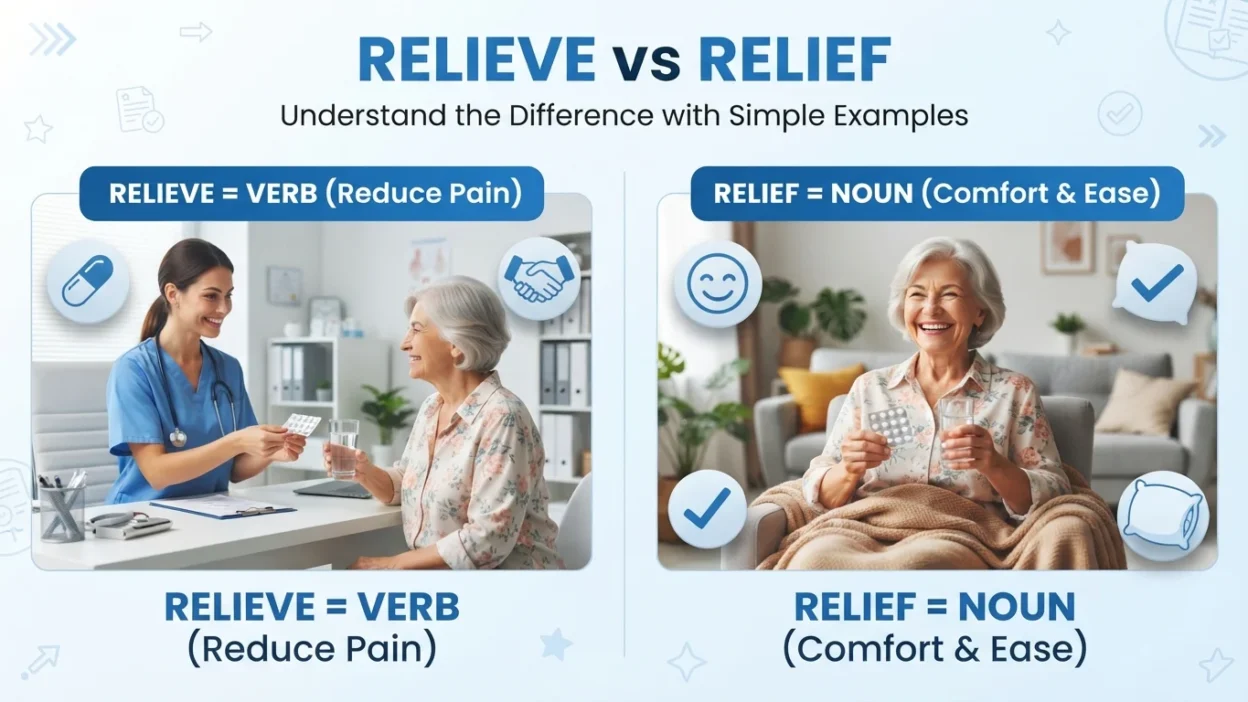
Relieve is a verb that means to reduce pain, stress, or difficulty, or to free someone from a burden or duty.
Relief is a noun that refers to the feeling of comfort after pain or stress has been reduced or help provided to people in need.
Understanding the difference between relieve vs relief will help you use each word correctly in speaking and writing.
Quick Answer
- Relieve = A verb meaning to reduce pain, stress, or difficulty. ✅
- Relief = A noun meaning comfort, ease, or assistance after hardship. ✅
Correct Examples
- This medicine will relieve your headache.
- I felt a sense of relief after hearing the good news.
What Does “Relieve” Mean?
Relieve is a verb.
It means:
- to reduce pain or discomfort
- to ease stress or anxiety
- to free someone from a responsibility or duty
- to make a difficult situation better
Examples of Relieve in Sentences
- This medicine can relieve muscle pain.
- Deep breathing helps relieve stress.
- The nurse came to relieve the night shift worker.
- Drinking water may relieve dehydration symptoms.
- The manager hired extra staff to relieve the workload.
What Does “Relief” Mean?
Relief is a noun.
It refers to:
- the feeling of comfort after pain or worry ends
- help or aid provided during emergencies
- a reduction in pain or difficulty
Examples of Relief in Sentences
- She sighed with relief when the exam was over.
- The medicine provided quick relief from pain.
- Emergency relief arrived after the flood.
- We felt great relief after finding the lost dog.
- Tax relief helped many small businesses.
Relieve vs Relief Comparison Table
| Feature | Relieve | Relief |
|---|---|---|
| Part of speech | Verb | Noun |
| Means to reduce pain or stress | ✅ Yes | ❌ No |
| Refers to comfort after difficulty | ❌ No | ✅ Yes |
| Refers to aid or assistance | ❌ No | ✅ Yes |
| Standard English | ✅ Yes | ✅ Yes |
Word Comparison
When to Use Relieve
Use relieve when describing an action that reduces pain, stress, pressure, or responsibility.
Examples
- Stretching can relieve back pain.
- The teacher tried to relieve students’ anxiety.
- They worked together to relieve financial pressure.
- Volunteers helped relieve the burden on hospital staff.
When to Use Relief
Use relief when referring to the result of being relieved or to assistance.
Examples
- I felt immediate relief after the treatment.
- Disaster relief teams arrived quickly.
- The news brought relief to the family.
- Financial relief was offered to affected businesses.
Common Mistakes
Using Relief as a Verb
Incorrect:
- This cream will relief the pain.
Correct:
- This cream will relieve the pain.
Using Relieve as a Noun
Incorrect:
- I felt great relieve after the interview.
Correct:
- I felt great relief after the interview.
Common Phrases
Relieve
- relieve pain
- relieve stress
- relieve pressure
- relieve symptoms
- relieve someone of duty
Relief
- pain relief
- sigh of relief
- disaster relief
- relief fund
- tax relief
Synonyms
Synonyms for Relieve
- ease
- reduce
- lessen
- alleviate
- soothe
Synonyms for Relief
- comfort
- ease
- reassurance
- aid
- assistance
American vs British English Differences
There is no difference between American and British English.
Both varieties use:
- relieve as the verb.
- relief as the noun.
Why Correct Word Choice Matters
Using the correct form helps you:
- improve grammar accuracy
- distinguish between verbs and nouns
- communicate more clearly
- write professionally
Since relieve and relief are closely related, they are commonly confused by English learners.
Tips to Remember the Difference
Relieve = Action
If someone does something to reduce pain, stress, or difficulty, use relieve.
Example:
- The medicine will relieve your headache.
Relief = Result
If you’re talking about the feeling or benefit after the problem is reduced, use relief.
Example:
- I felt relief after taking the medicine.
Easy Memory Trick
- Relieve = Verb (Action)
- Relief = Noun (Result)
(FAQs)
What is the difference between relieve and relief?
Relieve is a verb meaning to reduce pain, stress, or difficulty. Relief is a noun referring to the comfort or assistance that follows.
Which is correct: “relieve pain” or “relief pain”?
The correct phrase is relieve pain.
Can I say “I felt relieve”?
No. The correct sentence is I felt relief.
What is “pain relief”?
Pain relief refers to anything that reduces or eases pain, such as medication or treatment.
Can “relief” mean emergency aid?
Yes. Relief also refers to assistance provided after disasters or emergencies, such as flood relief or disaster relief.
Is there a difference between British and American English?
No. Both varieties use relieve and relief in the same way.
How can I remember the difference?
Think:
- Relieve = Action
- Relief = Result
Final Summary
The difference between relieve and relief comes down to grammar. Relieve is a verb that means to reduce pain, stress, or difficulty, while relief is a noun referring to the comfort, ease, or assistance that follows.
Whenever you’re describing an action, use relieve. When referring to the feeling or result, use relief.
Actionable Takeaway
Use:
- relieve ✅ as a verb meaning to reduce pain, stress, or burden.
- relief ✅ as a noun meaning comfort, ease, or assistance.
Memory trick:
- Relieve = Action
- Relief = Result