If you’ve ever wondered if “sellable” or “saleable” is the correct word, you’re not alone. The good news is that both words are correct.
They have the same meaning but differ mainly in spelling preference and regional usage.
Sellable and saleable both mean able to be sold or likely to sell successfully.
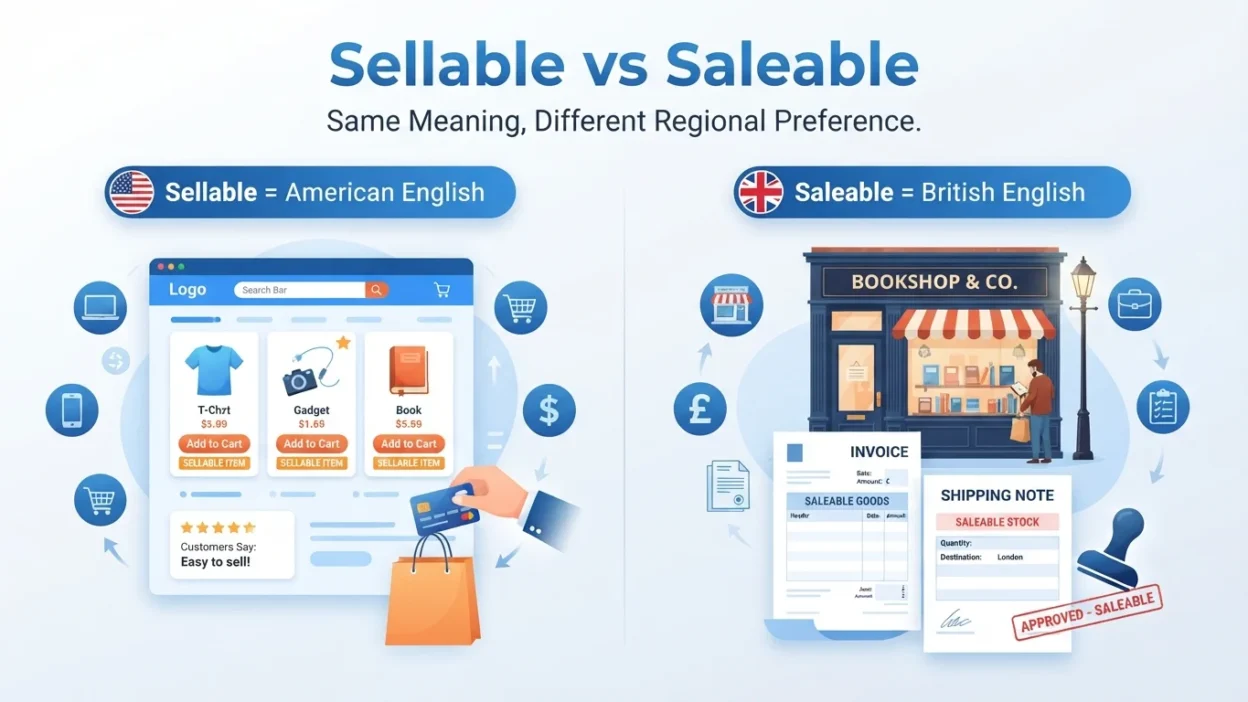
However, sellable is more common in American English and modern marketing, while saleable is more frequently seen in British English and formal business writing.
Quick Answer
- Sellable = ✅ Correct. More common in American English.
- Saleable = ✅ Correct. More common in British English and formal contexts.
Both mean capable of being sold.
Correct Examples
- The product has become highly sellable after the redesign.
- The artwork is considered saleable in international markets.
What Does “Sellable” Mean?
Sellable is an adjective.
It means:
- capable of being sold
- attractive to buyers
- likely to sell well
It is commonly used in:
- marketing
- advertising
- e-commerce
- product development
Examples of Sellable in Sentences
- The company created a more sellable product.
- Bright packaging makes the item more sellable.
- We need a sellable business idea.
- The updated design is far more sellable.
- Good branding makes products more sellable.
What Does “Saleable” Mean?
Saleable is also an adjective.
It has the same meaning:
- fit for sale
- capable of being sold
- commercially marketable
It is often found in:
- British English
- legal documents
- business reports
- financial writing
Examples of Saleable in Sentences
- The goods were found to be saleable.
- Only saleable products were displayed.
- The company increased its saleable inventory.
- The property remains saleable despite market changes.
- These items are considered saleable assets.
Sellable vs Saleable Comparison Table
| Feature | Sellable | Saleable |
|---|---|---|
| Meaning | Able to be sold | Able to be sold |
| Standard English | ✅ Yes | ✅ Yes |
| American English | ✅ More common | ✔️ Less common |
| British English | ✔️ Used | ✅ More common |
| Formal business writing | ✔️ Yes | ✅ Often preferred |
Word Comparison
When to Use Sellable
Use sellable when writing for:
- American audiences
- marketing materials
- product descriptions
- online stores
- advertising copy
Examples
- The product is highly sellable.
- We need a more sellable design.
- A memorable brand makes products sellable.
- The revised packaging increased its sellable appeal.
When to Use Saleable
Use saleable when writing for:
- British audiences
- legal documents
- financial reports
- formal business communication
Examples
- The goods remained saleable after inspection.
- The company listed its saleable assets.
- Only saleable merchandise was accepted.
- The warehouse stores saleable inventory.
Common Mistakes
Thinking One Is Incorrect
Incorrect belief:
- Only sellable is correct.
Correct:
- Both sellable and saleable are correct English words.
Mixing Regional Styles
If you’re writing for an American audience, sellable is usually the better choice. For British readers or formal legal contexts, saleable may sound more natural.
Common Phrases
Sellable
- sellable product
- sellable idea
- sellable brand
- sellable merchandise
- highly sellable
Saleable
- saleable goods
- saleable assets
- saleable inventory
- saleable property
- saleable stock
Synonyms
Synonyms for Sellable / Saleable
- marketable
- commercial
- tradable
- merchantable
- profitable
- fit for sale
American vs British English Differences
This is where the main distinction lies:
| American English | British English |
|---|---|
| Sellable is more common. | Saleable is more common. |
Both spellings are accepted in both varieties of English, but audience expectations differ.
Why Correct Word Choice Matters
Choosing the right spelling helps you:
- match your audience’s expectations
- maintain consistency
- improve readability
- present a professional style
For SEO and modern marketing content, sellable is often the more recognizable spelling, especially for American readers.
Tips to Remember the Difference
Sellable = American Preference
Think of sell able.
Example:
- It’s a highly sellable product.
Saleable = British Preference
Think of sale able.
Example:
- The company owns many saleable assets.
Easy Memory Trick
- Sellable = American
- Saleable = British
Frequently Asked Questions (FAQs)
What is the difference between sellable and saleable?
There is no difference in meaning. Both mean capable of being sold. The main difference is regional preference: sellable is more common in American English, while saleable is more common in British English.
Which spelling is correct?
Both sellable and saleable are correct.
Which is more common in American English?
Sellable is more common in American English.
Which is more common in British English?
Saleable is generally preferred in British English, especially in formal contexts.
Can I use sellable in business writing?
Yes. It is widely accepted, particularly in American business and marketing.
Is saleable old-fashioned?
No. It is still commonly used, especially in British English and legal or commercial documents.
How can I remember the difference?
Think:
- Sellable = American preference
- Saleable = British preference
Final Summary
The difference between sellable and saleable is mainly regional preference, not meaning. Both words describe something that can be sold or is likely to sell successfully.
Sellable is more common in American English and marketing, while saleable is more common in British English and formal commercial writing.
Choose the spelling that best matches your audience, and stay consistent throughout your writing.
Actionable Takeaway
Use:
- sellable ✅ for American English, marketing, and e-commerce.
- saleable ✅ for British English and formal commercial writing.
Memory trick:
- Sellable = American
- Saleable = British