If you’ve seen both “rehireable” and “rehirable” in job applications, HR documents, or workplace discussions, you may wonder which spelling is correct. Since English often forms adjectives by adding “-able” to verbs, the extra e can create confusion.
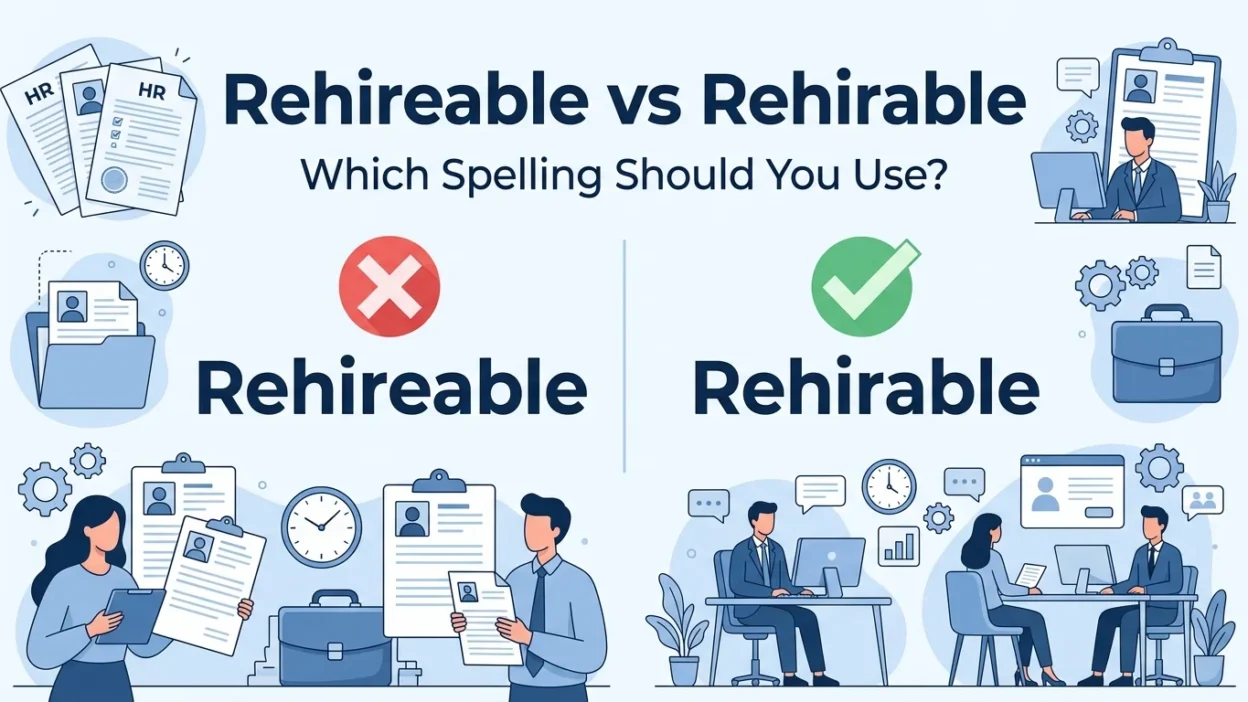
The short answer is that “rehirable” is the preferred and most widely accepted spelling in modern English. While “rehireable” occasionally appears in writing, it is generally considered a nonstandard variant and is far less common.
Quick Answer
“Rehirable” is the preferred spelling.
“Rehireable” is usually considered a nonstandard or less common variant.
Correct Example
- The employee left on good terms and is considered rehirable.
Less Preferred Example
- The employee left on good terms and is considered rehireable.
What Does Rehirable Mean?
Rehirable is an adjective used to describe a former employee who is eligible to be hired again by an organization.
Employers often use the term during:
- exit interviews
- employee evaluations
- HR records
- reference checks
- rehiring decisions
Examples of Rehirable in Sentences
- She resigned professionally and remains rehirable.
- The company marked the employee as rehirable.
- Most departing staff members were considered rehirable.
- His performance record made him highly rehirable.
- HR confirmed that she is rehirable in the future.
Is Rehireable a Real Word?
Rehireable does appear occasionally in workplace documents and online content. However, it is much less common than rehirable.
Most professional writers and HR departments prefer:
- rehirable
because it follows the standard pattern used in words such as:
- desirable
- admirable
- manageable
Why Is Rehirable Preferred?
When -able is added to many verbs ending in e, the final e is typically dropped.
Examples:
| Base Word | Preferred Form |
|---|---|
| admire | admirable |
| desire | desirable |
| manage | manageable |
| rehire | rehirable |
Following this pattern, rehirable is considered the cleaner and more accepted spelling.
Rehireable vs Rehirable Comparison Table
| Feature | Rehirable | Rehireable |
|---|---|---|
| Correct spelling | Yes | |
| Commonly preferred | Yes | No |
| Professional HR usage | Yes | Sometimes |
| Standard English formation | Yes | Less common |
| Recommended choice | Yes | No |
Word Formation Rule
rehire+-able→rehirable
Common Mistakes With Rehirable
Keeping the Extra “E”
Many writers assume the base word should remain unchanged.
Less Preferred:
- rehireable
Preferred:
- rehirable
Assuming Both Are Equally Common
While both forms may appear online, rehirable is significantly more accepted in professional usage.
Inconsistent HR Documentation
Organizations sometimes switch between spellings. Consistency is important in official records.
Rehirable in Workplace Contexts
Employee Records
Example:
- The worker was listed as rehirable after resignation.
Exit Interviews
Example:
- Managers determine whether an employee is rehirable.
Future Employment Opportunities
Example:
- Being marked rehirable can help former employees return later.
Reference Checks
Example:
- Employers may ask whether a former worker is rehirable.
Common Phrases Using Rehirable
Eligible for Rehire
Meaning: qualified to be hired again.
Example:
- The employee is eligible for rehire.
Rehirable Employee
Meaning: a former worker who can return.
Example:
- She remains a rehirable employee.
Marked Rehirable
Meaning: officially approved for future employment.
Example:
- HR marked him rehirable.
Rehire Status
Meaning: an employee’s eligibility for future employment.
Example:
- The company reviewed her rehire status.
Synonyms for Rehirable
Depending on context, similar phrases include:
- eligible for rehire
- suitable for reemployment
- qualified for rehiring
- approved for future employment
Example
- The employee was eligible for rehire and considered rehirable.
Opposites of Rehirable
Antonyms may include:
- non-rehirable
- ineligible for rehire
- disqualified
- barred from reemployment
Example
- The employee was deemed ineligible for rehire.
American vs British English Differences
There is no major difference between American and British English regarding this term.
Both generally favor:
- rehirable
when the word is used.
Why Correct Spelling Matters
Using the preferred spelling helps improve:
- professionalism
- consistency
- readability
- HR documentation accuracy
- workplace communication
Using uncommon variants may:
- confuse readers
- create inconsistency
- appear less polished
Tips to Remember the Correct Spelling
Drop the Final “E”
Think:
- hire → hirable
- rehire → rehirable
Follow Similar Word Patterns
Examples:
- admire → admirable
- desire → desirable
- rehire → rehirable
Use HR Industry Standards
Most employers and HR professionals use:
- rehirable
FAQs About Rehireable vs Rehirable
Which spelling is correct: rehireable or rehirable?
Rehirable is the preferred and most widely accepted spelling.
Is rehireable wrong?
It is not always considered completely wrong, but it is much less common and generally not preferred.
What does rehirable mean?
It describes a former employee who is eligible to be hired again.
Why is rehirable preferred?
Because it follows standard English word-formation rules that usually drop the final e before adding -able.
Is rehirable an official HR term?
Yes. Many HR departments use the term when evaluating former employees.
What does eligible for rehire mean?
It means a former employee may be considered for future employment.
Do British and American English use different spellings?
No. Both generally favor rehirable.
How can I remember the correct spelling?
Think:
- admire → admirable
- desire → desirable
- rehire → rehirable
Final Summary
The difference between rehireable vs rehirable comes down to preferred spelling and standard word formation. While rehireable occasionally appears in writing, rehirable is the more accepted, professional, and widely used form. It follows common English spelling rules and is the version most often seen in HR and workplace documentation.
Whether you’re creating employee records, writing HR policies, or discussing workplace eligibility, using rehirable will help your writing appear more accurate and professional.
Actionable Takeaway
When referring to someone who can be hired again, use:
- rehirable ✅
Avoid:
- rehireable ❌
A simple memory trick:
- rehire → rehirable
Drop the extra e before adding -able.