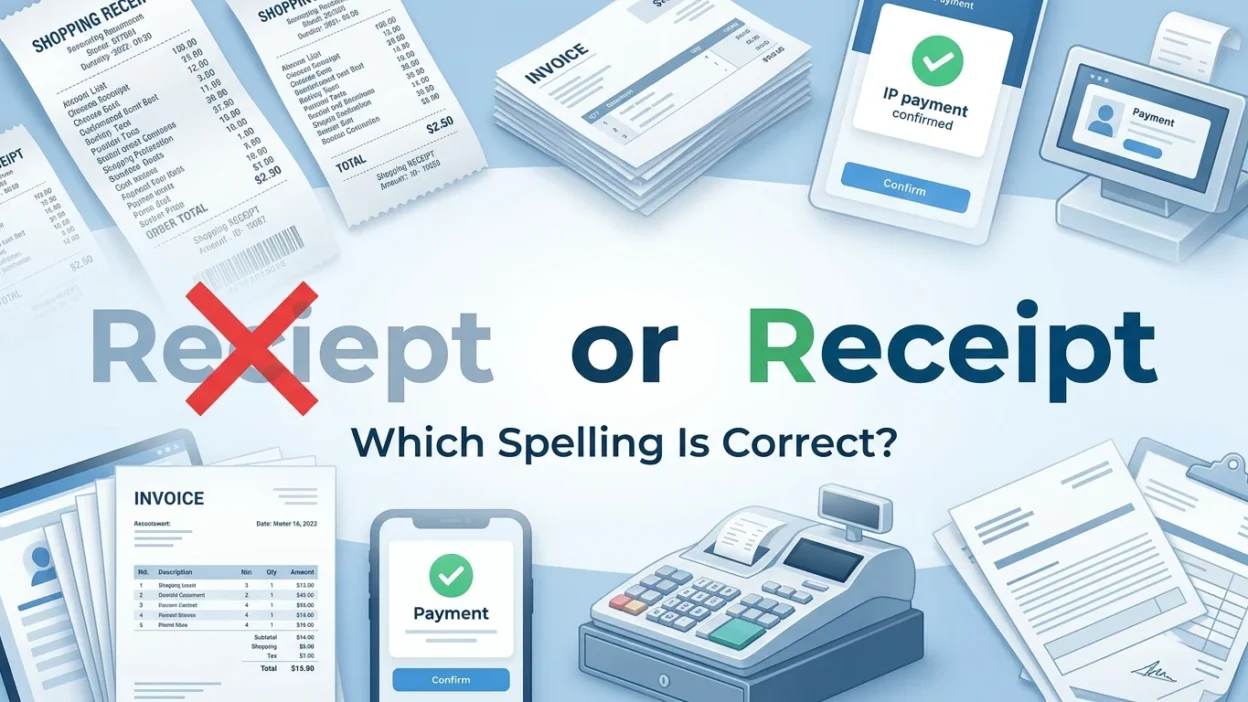
English spelling can sometimes feel frustrating because certain letter combinations do not always sound the way they look. One of the most common spelling mistakes people make is writing “reciept” instead of “receipt.” Since the “ie” and “ei” pattern confuses many English learners and native speakers alike, this error is very understandable.
The correct spelling is “receipt.” Meanwhile, “reciept” is incorrect in standard English. Learning the proper spelling can help improve your writing accuracy, professionalism, and confidence in emails, business documents, school assignments, and everyday communication.
Quick Answer
“Receipt” is the correct spelling.
“Reciept” is incorrect in standard English.
Correct Example
- Please keep your receipt for returns.
Incorrect Example
- Please keep your reciept for returns.
What Does Receipt Mean?
The word “receipt” is a noun that refers to:
- proof of payment
- a written record of purchase
- confirmation that something was received
It is commonly used in:
- shopping
- banking
- accounting
- business transactions
Examples of Receipt in Sentences
- The cashier handed me a receipt.
- Keep the receipt in case you need a refund.
- She emailed the payment receipt yesterday.
- Customers must show their receipt at the exit.
- The company requested a receipt for reimbursement.
Is Reciept a Real Word?
No, “reciept” is not considered a correct English word.
It is simply a common spelling mistake caused by reversing the vowels:
- ei
into:
- ie
Standard dictionaries and grammar guides only recognize:
- receipt
Why Do People Write “Reciept”?
The mistake usually happens because:
- “ie” combinations are common in English
- spelling rules can feel inconsistent
- pronunciation does not clearly reveal the vowel order
Many people remember the rhyme:
- “I before E except after C”
The word “receipt” follows this rule because:
- the letters come after “c”
So the correct order becomes:
- ei
Correct Word Structure
receipt=reciept
Receipt vs Reciept Comparison Table
| Feature | Receipt | Reciept |
|---|---|---|
| Correct spelling | Yes | No |
| Standard English | Accepted | Incorrect |
| Dictionary word | Yes | No |
| Used professionally | Yes | No |
| Grammar approved | Yes | No |
The “I Before E” Rule
A common spelling guideline says:
I before E except after C
Examples Following the Rule
| Word | Correct Spelling |
|---|---|
| receive | receive |
| receipt | receipt |
| ceiling | ceiling |
| deceive | deceive |
Since “receipt” comes after:
- c
the correct vowel order is:
- ei
Common Mistakes With Receipt
Reversing the Vowels
Incorrect:
- I lost the reciept.
Correct:
- I lost the receipt.
Typing Too Quickly
Fast typing often swaps:
- ei
into - ie
Relying Only on Pronunciation
The word’s pronunciation does not clearly indicate the spelling pattern.
Different Meanings of Receipt
Shopping Receipt
Example:
- The store printed a receipt automatically.
Payment Confirmation
Example:
- Email receipts help track expenses.
Acknowledgment of Delivery
Example:
- The office confirmed receipt of the package.
Synonyms for Receipt
Depending on context, similar words include:
- invoice
- proof of purchase
- confirmation
- acknowledgment
- record
Example
- Keep your proof of purchase and receipt safe.
American vs British English Differences
There is no spelling difference between American English and British English for this word.
Both use:
- receipt
Neither standard variety uses:
- reciept
Why Correct Spelling Matters
Correct spelling improves:
- professionalism
- readability
- communication clarity
- grammar accuracy
- writing confidence
Misspellings like “reciept” may:
- distract readers
- reduce credibility
- appear careless
Common Phrases Using Receipt
Sales Receipt
Meaning: proof of a purchase transaction.
Example:
- The customer requested a sales receipt.
Receipt of Payment
Meaning: confirmation that money was received.
Example:
- The business issued a receipt of payment.
Keep the Receipt
Meaning: save proof of purchase.
Example:
- Always keep the receipt for expensive items.
Confirm Receipt
Meaning: acknowledge receiving something.
Example:
- Please confirm receipt of this email.
Tips to Remember the Correct Spelling
Remember “EI After C”
Correct:
- receipt
Not:
- reciept
Use the Classic Rule
Think:
- “I before E except after C”
Connect It to “Receive”
Both words use:
- cei
Examples:
- receive
- receipt
FAQs
Which spelling is correct: receipt or reciept?
“Receipt” is the correct spelling.
Is reciept a real word?
No. “Reciept” is considered incorrect in standard English.
Why is receipt spelled with “ei”?
Because it follows the rule:
- “I before E except after C”
What does receipt mean?
It means proof of payment or confirmation that something was received.
Is receipt used in British and American English?
Yes. Both varieties use “receipt.”
What are synonyms for receipt?
Common synonyms include invoice, acknowledgment, and proof of purchase.
Why do people spell receipt incorrectly?
Usually because “ie” and “ei” combinations are confusing in English spelling.
How can I remember the correct spelling?
Remember:
- after “c,” use “ei”
So:
- receipt
Final Summary
The difference between receipt or reciept is simple once you understand the spelling rule. “Receipt” is the correct and accepted English spelling, while “reciept” is incorrect because the vowel order must follow the “I before E except after C” guideline.
Whether you are writing emails, invoices, business documents, academic papers, or online content, using “receipt” correctly helps your writing appear polished, accurate, and trustworthy. Small spelling improvements like this can significantly strengthen communication clarity and professionalism.
Actionable Takeaway
Whenever referring to proof of payment or confirmation of receiving something, always write:
- receipt
Not:
- reciept
Remember the easy spelling rule:
- after “c,” use “ei”
This simple trick will help you avoid one of the most common English spelling mistakes.