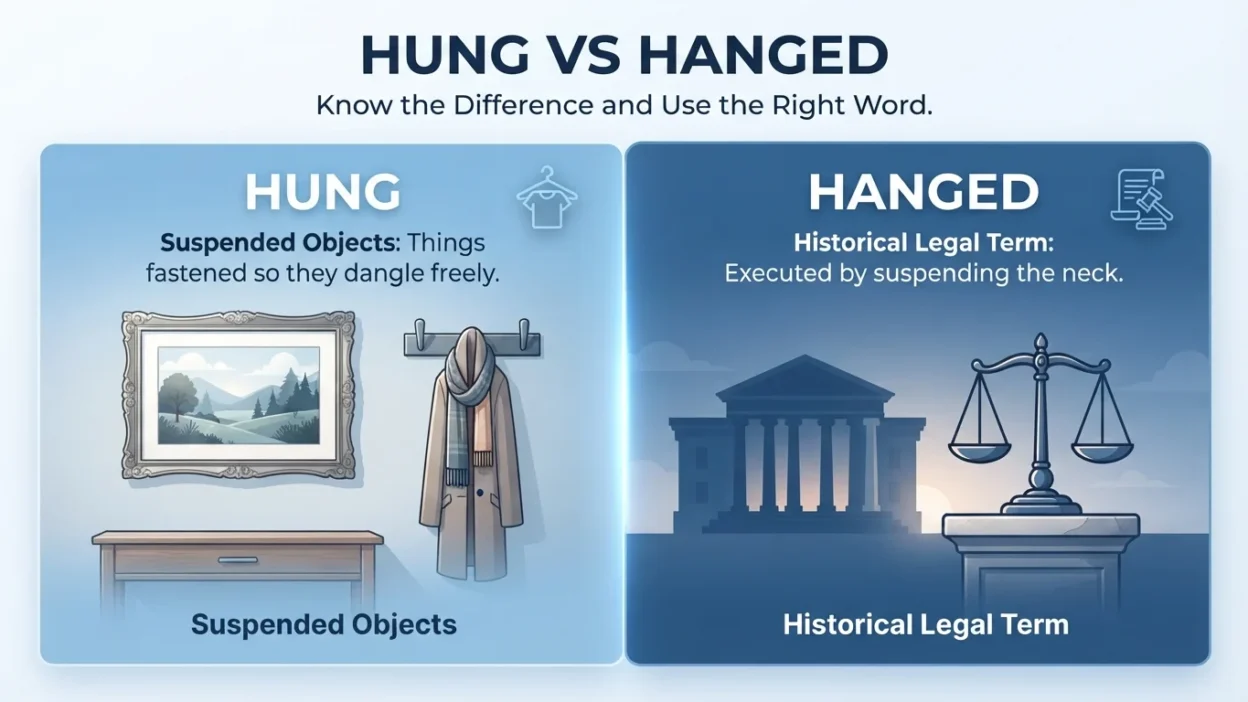
If you’ve ever wondered if “hung” or “hanged” is the correct word, you’re not alone. These two words are both past tense forms of the verb hang, but they are used in different contexts.
Hung is the standard past tense and past participle for placing or suspending something, while hanged is used only when referring to execution by hanging.
Understanding the difference between hung vs hanged will help you use the correct word in both everyday and historical writing.
Quick Answer
- Hung = Suspended or attached something.
- Hanged = Executed someone by hanging.
Correct Examples
- She hung the picture on the wall.
- The criminal was hanged for treason.
What Does “Hung” Mean?
Hung is the usual past tense and past participle of hang.
Use hung when talking about:
- placing something on a hook or wall
- suspending an object
- draping fabric
- lowering or positioning something
Examples of Hung in Sentences
- He hung his coat by the door.
- We hung the decorations before the party.
- The painting was hung in the gallery.
- She hung the washing out to dry.
- Christmas lights were hung across the street.
What Does “Hanged” Mean?
Hanged is a special past tense form of hang used only when referring to a person being executed by hanging.
This usage is mainly found in:
- historical writing
- legal contexts
- literature discussing capital punishment
Examples of Hanged in Sentences
- The pirate was hanged in the eighteenth century.
- He was hanged after being convicted of treason.
- The novel tells the story of a man who was hanged for murder.
- Several prisoners were hanged under the old law.
- The sentence ordered that the convicted criminal be hanged.
Note: Today, hanged is mostly used when discussing historical events or jurisdictions where execution by hanging is being described.
Hung vs Hanged Comparison Table
| Feature | Hung | Hanged |
|---|---|---|
| Past tense of hang | ✅ Yes | ✅ Yes (special use) |
| Means suspended or attached | ✅ Yes | ❌ No |
| Refers to execution by hanging | ❌ No | ✅ Yes |
| Used in everyday English | ✅ Yes | ❌ Rare |
| Standard English | ✅ Yes | ✅ Yes |
Word Comparison
When to Use Hung
Use hung when referring to:
- pictures
- clothes
- curtains
- decorations
- objects suspended from something
Examples
- She hung the mirror above the fireplace.
- They hung lanterns around the garden.
- I hung my backpack on the chair.
- The artist hung several new paintings.
When to Use Hanged
Use hanged only when referring to:
- judicial executions
- historical executions
- capital punishment by hanging
Examples
- The outlaw was hanged in 1820.
- According to the records, the prisoner was hanged.
- The film depicts a man who was hanged for a crime.
Common Mistakes
Using Hung for an Execution
Incorrect:
- The prisoner was hung.
Correct:
- The prisoner was hanged.
Using Hanged for Everyday Situations
Incorrect:
- She hanged her coat by the door.
Correct:
- She hung her coat by the door.
Common Phrases
Hung
- hung on the wall
- hung up the phone
- hung the curtains
- hung out the washing
- hung decorations
Hanged
- hanged for treason
- hanged by the neck
- publicly hanged
- hanged under the law
- sentenced to be hanged
Synonyms
Synonyms for Hung
- suspended
- attached
- mounted
- draped
- displayed
Synonyms for Hanged
- executed by hanging
- put to death by hanging
American vs British English Differences
There is no significant difference.
Both American and British English follow the same rule:
- Hung is used for objects and everyday situations.
- Hanged is reserved for executions by hanging.
Why Correct Word Choice Matters
Using the correct form helps you:
- improve grammatical accuracy
- avoid confusion
- write more naturally
- distinguish everyday actions from historical or legal contexts
Because both words come from the verb hang, they are often confused by English learners and native speakers alike.
Tips to Remember the Difference
Hung = Objects
If something is suspended, use hung.
Example:
- The picture was hung on the wall.
Hanged = Execution
If someone was executed by hanging, use hanged.
Example:
- The prisoner was hanged.
Easy Memory Trick
- Hung = Things
- Hanged = Executions
(FAQs)
What is the difference between hung and hanged?
Hung is the regular past tense of hang for objects or everyday actions. Hanged is used only when referring to a person being executed by hanging.
Which is correct: “hung a picture” or “hanged a picture”?
The correct phrase is hung a picture.
Which is correct: “the prisoner was hung” or “the prisoner was hanged”?
The correct historical and legal form is the prisoner was hanged.
Is hanged still used today?
Yes, but almost exclusively in discussions of capital punishment, history, or law.
Can I always use hung?
No. While hung is correct in nearly all everyday situations, hanged should be used when referring to execution by hanging.
Is there a difference between British and American English?
No. Both varieties follow the same grammatical distinction.
How can I remember the difference?
Think:
- Hung = Objects
- Hanged = Executions
Final Summary
The difference between hung vs hanged is simple. Hung is the standard past tense of hang for objects, decorations, clothes, and other everyday situations, while hanged is reserved only for executions by hanging.
Whenever you’re talking about suspending an object, use hung. If you’re referring to a historical or legal execution by hanging, use hanged.
Actionable Takeaway
Use:
- hung ✅ for objects or things that are suspended.
- hanged ✅ only for executions by hanging.
Memory trick:
- Hung = Things
- Hanged = Executions