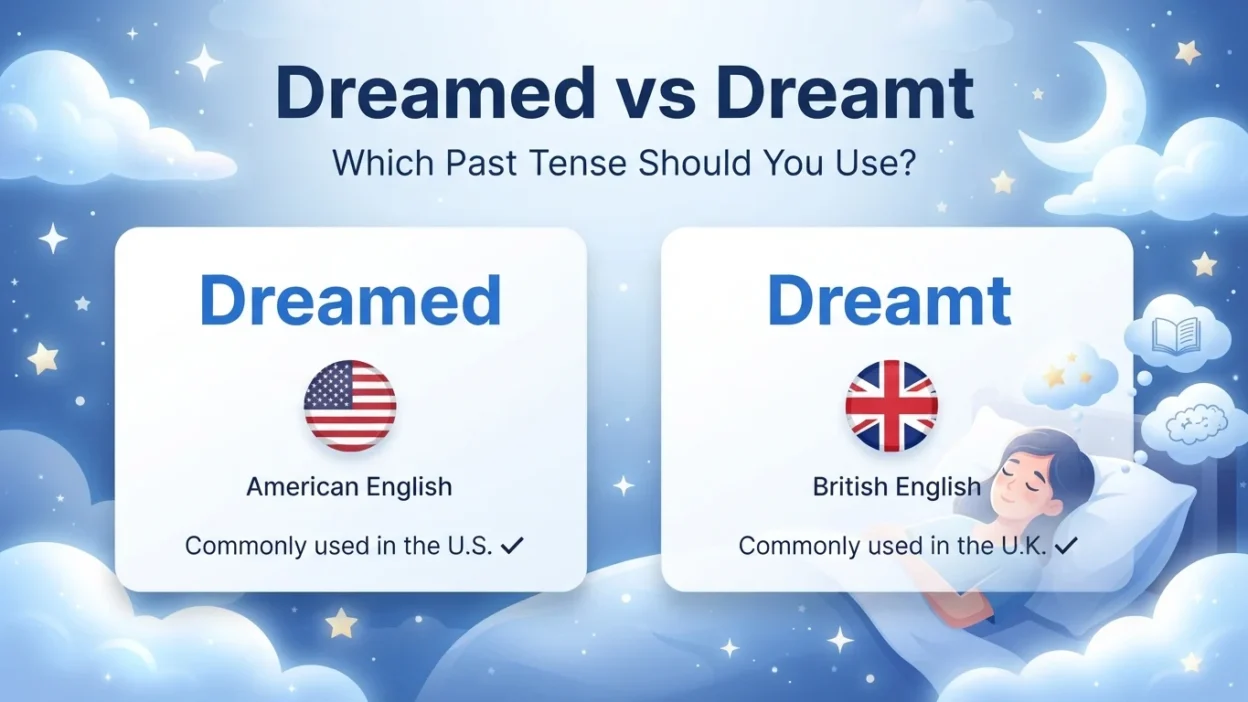
If you’ve ever wondered whether “dreamed” or “dreamt” is the correct past tense of dream, you’re not alone. The good news is that both are correct. They have the same meaning, but their usage varies depending on the variety of English and the tone of your writing.
Dreamed is more common in American English, while dreamt is more common in British English. Both forms are grammatically correct and widely accepted.
Quick Answer
- Dreamed = More common in American English.
- Dreamt = More common in British English.
Correct Examples
- I dreamed about my childhood last night.
- I dreamt about my childhood last night.
Both sentences are correct.
What Do Dreamed and Dreamt Mean?
Both dreamed and dreamt are the past tense and past participle of the verb dream.
They mean:
- experienced dreams while sleeping
- imagined or hoped for something
- envisioned a future goal
Examples of Dreamed in Sentences
- I dreamed about flying.
- She dreamed of becoming a doctor.
- We dreamed of traveling the world.
- He dreamed that he won the lottery.
- They had dreamed of this moment for years.
Examples of Dreamt in Sentences
- I dreamt of living by the sea.
- She dreamt about her childhood home.
- We dreamt of a better future.
- He dreamt he could fly.
- They had dreamt about this opportunity for years.
Dreamed vs Dreamt Comparison Table
| Feature | Dreamed | Dreamt |
|---|---|---|
| Correct spelling | Yes | Yes |
| American English | More common | Less common |
| British English | Correct | More common |
| Formal writing | Yes | Yes |
| Everyday speech | Yes | Yes |
Word Comparison
When to Use Dreamed
Use dreamed when:
- writing in American English
- writing for U.S. audiences
- following modern style guides
- aiming for a more contemporary tone
Examples
- I dreamed of starting my own business.
- She dreamed about winning the competition.
When to Use Dreamt
Use dreamt when:
- writing in British English
- writing for U.K. audiences
- creating a literary or poetic tone
- following British spelling conventions
Examples
- He dreamt of distant lands.
- She dreamt she was walking through a forest.
Common Mistakes
Thinking One Is Incorrect
Incorrect assumption:
- Dreamt is wrong.
Correct:
- Both dreamed and dreamt are correct.
Mixing Language Styles
If you’re writing in American English, it’s best to use dreamed consistently. If you’re writing in British English, dreamt is often preferred.
Common Phrases
Dreamed Of
Example:
- She dreamed of becoming an astronaut.
Dreamed About
Example:
- I dreamed about my school days.
Dreamt Of
Example:
- They dreamt of a peaceful future.
Dreamt About
Example:
- He dreamt about climbing a mountain.
Synonyms
Depending on the context, similar words include:
- imagined
- envisioned
- fantasized
- hoped
- aspired
Example
- She envisioned a successful career.
American vs British English Differences
American English
Preferred:
- dreamed
Also acceptable:
- dreamt
British English
Commonly used:
- dreamt
Also acceptable:
- dreamed
Why Correct Word Choice Matters
Choosing the version that matches your audience helps:
- maintain consistency
- improve readability
- meet regional language expectations
- strengthen your writing style
Tips to Remember the Difference
Writing for an American Audience?
Choose:
- dreamed
Writing for a British Audience?
Choose:
- dreamt
Remember They Mean the Same Thing
There is no difference in meaning—only a difference in regional preference and style.
(FAQs)
Which is correct: dreamed or dreamt?
Both are correct.
Is dreamt old fashioned?
Not necessarily. It is simply more common in British English and often has a slightly more literary feel.
Which form is more common in American English?
Dreamed is the preferred form.
Which form is more common in British English?
Dreamt is more common, although dreamed is also acceptable.
Do dreamed and dreamt have different meanings?
No. They have exactly the same meaning.
Can I use dreamt in formal writing?
Yes. It is grammatically correct and suitable for formal writing, especially in British English.
How can I remember the difference?
Think:
- American English = dreamed
- British English = dreamt
Final Summary
The difference between dreamed vs dreamt is mainly a matter of regional preference. Both are correct past tense forms of dream and have the same meaning.
- Dreamed is more common in American English.
- Dreamt is more common in British English.
Choose the form that best matches your audience, and use it consistently throughout your writing.
Actionable Takeaway
For American English, use:
- dreamed ✅
For British English, you can use:
- dreamt ✅
Memory trick:
- Dreamed = America
- Dreamt = Britain