If you’ve ever seen “saucey” and “saucy” and wondered which spelling is correct, you’re not alone. These words look very similar, and both appear online from time to time. The confusion often comes from social media, informal writing, and slang usage, where alternative spellings can spread quickly.
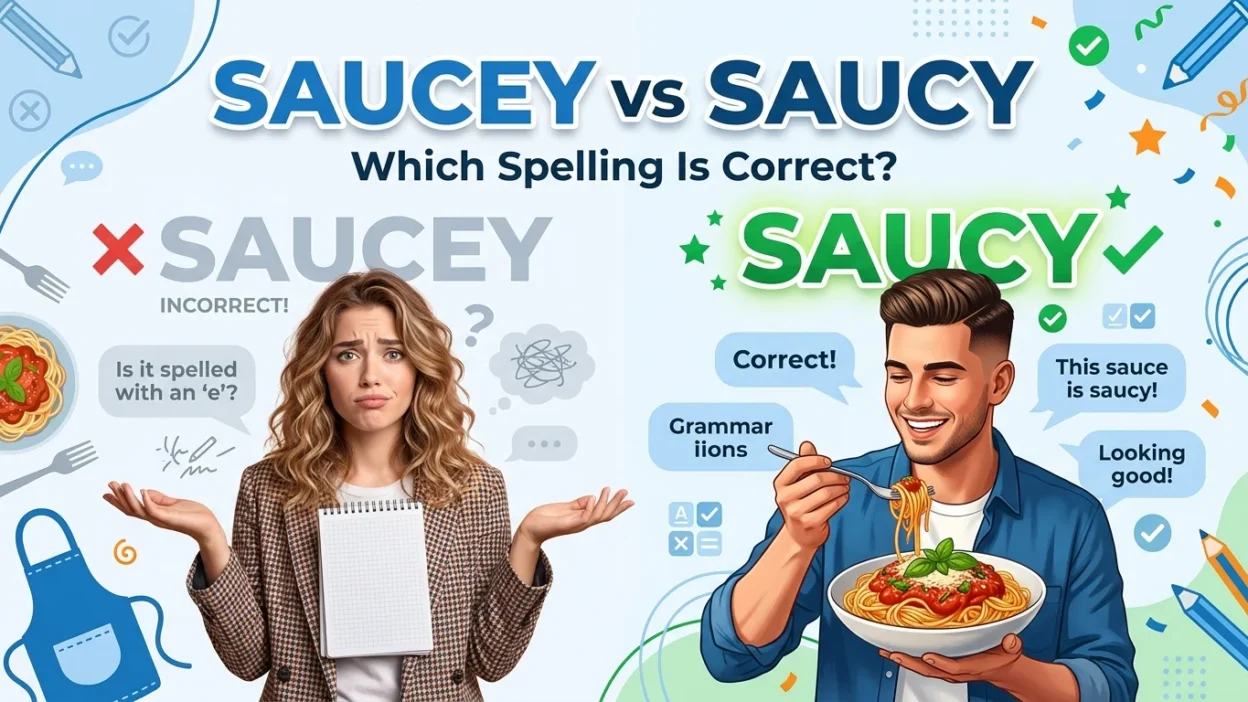
In standard English, “saucy” is the correct spelling. While “saucey” occasionally appears as a slang or creative variation, it is not the preferred spelling in dictionaries, formal writing, or professional communication. Understanding the difference will help you choose the right word for your audience and purpose.
Quick Answer
“Saucy” is the correct standard English spelling.
“Saucey” is a nonstandard variant sometimes used in slang or informal writing.
Correct Example
- She made a saucy remark during the meeting.
Informal Variant
- That outfit looks saucey.
What Does Saucy Mean?
Saucy is an adjective that can mean:
- bold or cheeky
- playfully disrespectful
- lively and confident
- full of sauce or flavor
- slightly provocative or spirited
The meaning depends on the context.
Examples of Saucy in Sentences
- The child gave a saucy response to the teacher.
- She has a saucy sense of humor.
- The pasta was covered in a rich, saucy tomato mixture.
- His comments were playful and saucy.
- The magazine featured a saucy interview.
Is Saucey a Real Word?
Saucey is not generally recognized as the standard spelling in modern dictionaries.
However, it sometimes appears:
- in slang
- on social media
- in brand names
- in creative marketing
- in informal online conversations
For proper English writing, saucy is almost always the better choice.
Why Is Saucy the Preferred Spelling?
English traditionally forms this adjective as:
- sauce → saucy
The -cy ending has been the accepted spelling for centuries.
Similar examples include:
| Base Word | Adjective |
|---|---|
| spice | spicy |
| ice | icy |
| sauce | saucy |
Because of this established pattern, dictionaries standardize:
- saucy
rather than:
- saucey
Saucey vs Saucy Comparison Table
| Feature | Saucy | Saucey |
|---|---|---|
| Standard English spelling | Yes | No |
| Dictionary approved | Yes | Rarely |
| Professional writing | Yes | No |
| Informal slang usage | Sometimes | Yes |
| Recommended for formal writing | Yes | No |
Correct Word Structure
sauce→saucy
Common Mistakes With Saucy
Adding an Extra “E”
Incorrect:
- She made a saucey comment.
Correct:
- She made a saucy comment.
Following Informal Internet Usage
Social media often popularizes alternative spellings that are not considered standard English.
Assuming It Follows the Base Word Exactly
Many people think:
- sauce → saucey
But English changes the ending to:
- saucy
Different Meanings of Saucy
Cheeky or Bold
Example:
- The student gave a saucy reply.
Confident and Stylish
Example:
- She walked in wearing a saucy red dress.
Flirtatious
Example:
- The actor delivered a saucy smile.
Covered in Sauce
Example:
- We enjoyed a saucy plate of pasta.
Common Phrases Using Saucy
Saucy Remark
Meaning: a cheeky comment.
Example:
- He made a saucy remark that made everyone laugh.
Saucy Attitude
Meaning: playful boldness.
Example:
- Her saucy attitude impressed the audience.
Saucy Outfit
Meaning: stylish or daring clothing.
Example:
- She wore a saucy outfit to the party.
Saucy Pasta
Meaning: food containing plenty of sauce.
Example:
- The restaurant serves delicious saucy pasta dishes.
Synonyms for Saucy
Depending on context, similar words include:
- cheeky
- bold
- sassy
- impudent
- playful
Example
- Her cheeky and saucy personality made her popular.
Opposites of Saucy
Antonyms include:
- polite
- reserved
- modest
- respectful
- timid
Example
- His response was polite rather than saucy.
American vs British English Differences
There is no spelling difference between American English and British English.
Both use:
- saucy
Neither considers:
- saucey
the standard spelling.
Why Correct Spelling Matters
Using the correct spelling improves:
- professionalism
- readability
- credibility
- communication clarity
- writing quality
Using saucey in formal contexts may:
- appear unprofessional
- distract readers
- weaken credibility
Tips to Remember the Correct Spelling
Think of Similar Words
Examples:
- spicy
- icy
- saucy
All end with:
- cy
Avoid Following Social Media Trends
Informal online spellings do not always match standard English.
Practice Full Sentences
Example:
- The comedian delivered several saucy jokes.
FAQs
Which spelling is correct: saucey or saucy?
Saucy is the correct standard English spelling.
Is saucey a real word?
It appears in slang and informal usage, but it is not the preferred standard spelling.
What does saucy mean?
It can mean cheeky, bold, playful, flirtatious, or full of sauce.
Why is saucy spelled without an “e”?
English changes the ending from sauce to saucy, following established spelling patterns.
Is saucy used in British and American English?
Yes. Both varieties use saucy.
What are synonyms for saucy?
Common synonyms include cheeky, sassy, bold, playful, and impudent.
Can I use saucey in professional writing?
It is generally better to use saucy, which is the accepted spelling.
How can I remember the correct spelling?
Think:
- spicy
- icy
- saucy
All follow the same pattern.
Final Summary
The difference between saucey vs saucy comes down to standard usage. “Saucy” is the correct dictionary spelling used in professional, academic, and everyday English. While “saucey” may appear in slang, branding, or social media posts, it is not generally considered standard English.
Whether you’re describing a cheeky personality, a playful comment, a bold fashion choice, or a sauce covered meal, saucy is the spelling that readers expect to see. Choosing the correct form helps your writing appear polished, credible, and professional.
Actionable Takeaway
Whenever you mean cheeky, bold, playful, or full of sauce, write:
- saucy
Not:
- saucey
A simple memory trick:
- spicy, icy, saucy
These adjectives all end with -cy, making the correct spelling easier to remember.