If you’ve ever wondered whether “foody” or “foodie” is the correct spelling, you’re not alone. Since both words appear online, it’s easy to assume they’re interchangeable. However, in standard English, one spelling is far more widely accepted.
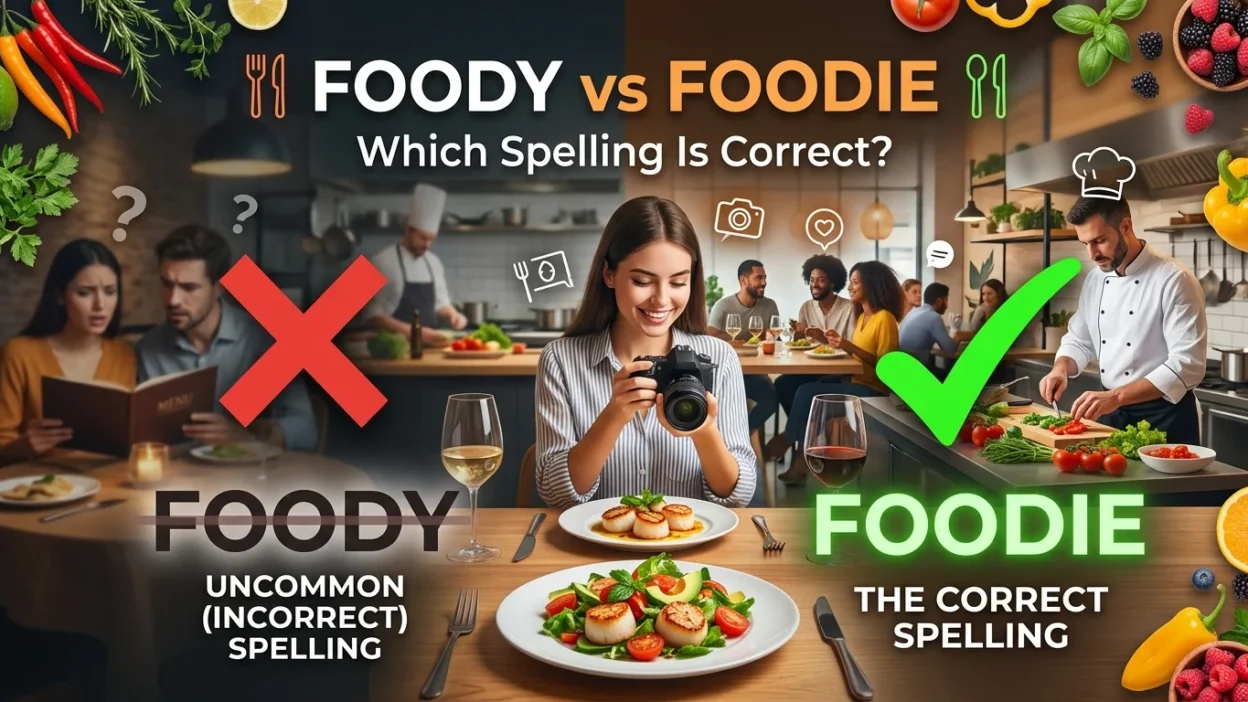
The correct and commonly used term is “foodie.” While “foody” occasionally appears as an alternative spelling, it is uncommon and generally considered nonstandard. For professional, academic, and everyday writing, foodie is the recommended choice.
Quick Answer
“Foodie” is the correct and preferred spelling.
“Foody” is an uncommon, nonstandard variant and is best avoided in most writing.
Correct Example
- She’s a foodie who loves trying new restaurants.
Less Preferred Example
- She’s a foody who loves trying new restaurants.
What Does Foodie Mean?
A foodie is someone who has a strong interest in food and enjoys:
- trying new cuisines
- exploring restaurants
- cooking and baking
- learning about ingredients
- sharing food experiences
The term is commonly used in blogs, travel guides, social media, and food magazines.
Examples of Foodie in Sentences
- My sister is a foodie who enjoys gourmet cooking.
- Every foodie should visit this restaurant.
- He’s a foodie with a passion for street food.
- The city is a paradise for foodies.
- She started a foodie blog to review local cafes.
Is Foody a Real Word?
Foody does appear occasionally in informal writing and some dictionaries list it as a variant spelling. However, it is much less common than foodie.
In modern English:
- foodie is the standard and preferred spelling.
- foody is a rare alternative that may look incorrect to many readers.
Why Is “Foodie” More Common?
The spelling foodie became popular in the late 20th century to describe enthusiastic lovers of food.
Today, you’ll most often see foodie used in:
- restaurant reviews
- travel articles
- cooking websites
- food blogs
- social media hashtags
Foody vs Foodie Comparison Table
| Feature | Foodie | Foody |
|---|---|---|
| Standard spelling | Yes | Rarely |
| Dictionary recognized | Yes | Sometimes (as a variant) |
| Common usage | Very common | Uncommon |
| Professional writing | Yes | Usually avoided |
| Social media and blogs | Yes | Rare |
Word Comparison
Common Mistakes With Foodie
Using Foody in Professional Writing
Although foody may be understood, foodie is the preferred spelling in published writing.
Incorrect (less preferred):
- She’s a foody blogger.
Correct:
- She’s a foodie blogger.
Assuming Both Are Equally Common
They are not. Foodie is overwhelmingly more common in modern English.
Different Uses of Foodie
Travel
Example:
- Paris is a dream destination for every foodie.
Restaurants
Example:
- Foodies love discovering hidden local restaurants.
Cooking
Example:
- He’s a foodie who enjoys experimenting with recipes.
Social Media
Example:
- She shares foodie photos on Instagram.
Common Phrases Using Foodie
Foodie Culture
Meaning: the community and lifestyle of people passionate about food.
Example:
- Foodie culture has grown rapidly online.
Foodie Destination
Meaning: a place known for excellent food.
Example:
- Tokyo is a famous foodie destination.
Foodie Blog
Meaning: a website about food experiences and recipes.
Example:
- She writes a popular foodie blog.
Foodie Tour
Meaning: a guided food experience.
Example:
- We booked a foodie tour through the city.
Synonyms for Foodie
Depending on context, similar words include:
- food enthusiast
- gourmet
- gastronome
- culinary enthusiast
- food lover
Example
- Every foodie appreciates authentic local cuisine.
Opposites of Foodie
There is no direct antonym, but contrasting expressions include:
- picky eater
- indifferent eater
- uninterested in food
Example
- Unlike his foodie friends, he’s a very picky eater.
American vs British English Differences
Both American and British English overwhelmingly prefer:
- foodie
The spelling foody is uncommon in both varieties.
Why Correct Spelling Matters
Using the preferred spelling improves:
- professionalism
- readability
- credibility
- SEO performance
- communication clarity
Because foodie is the widely recognized form, using it makes your writing appear more polished.
Tips to Remember the Correct Spelling
Think of Similar Informal Nouns
Words ending in -ie often describe people.
Examples:
- foodie
- techie
- groupie
Remember the Common Usage
Most restaurant reviews, travel blogs, and food websites use:
- foodie
Practice Full Sentences
Example:
- Every foodie enjoys discovering new flavors.
FAQs
Which spelling is correct: foody or foodie?
Foodie is the correct and preferred spelling.
Is foody a real word?
It exists as an uncommon variant, but foodie is the standard and recommended form.
What does foodie mean?
A foodie is someone who loves food, cooking, and trying new cuisines.
Which spelling should I use in professional writing?
Always use foodie.
Is foodie used in British and American English?
Yes. Both varieties widely use foodie.
Is foodie an informal word?
Yes. It is an informal but widely accepted noun.
What is another word for foodie?
Words such as food enthusiast, gourmet, or gastronome may fit depending on the context.
How can I remember the correct spelling?
Think of techie and foodie—both end in -ie.
Final Summary
The difference between foody vs foodie is mainly one of standard usage. “Foodie” is the accepted and widely preferred spelling for someone who loves food, cooking, and exploring new cuisines. “Foody” exists as an uncommon variant but is rarely used in professional or published writing.
If you want your writing to look polished and natural, foodie is the spelling you should choose.
Actionable Takeaway
Whenever you refer to someone who enjoys food and culinary experiences, write:
- foodie ✅
Avoid using:
- foody ❌ (except when matching a brand name or a stylistic choice)
A simple memory trick:
- Foodie ends in -ie, just like techie.
Remembering this pattern will help you choose the preferred spelling every time.