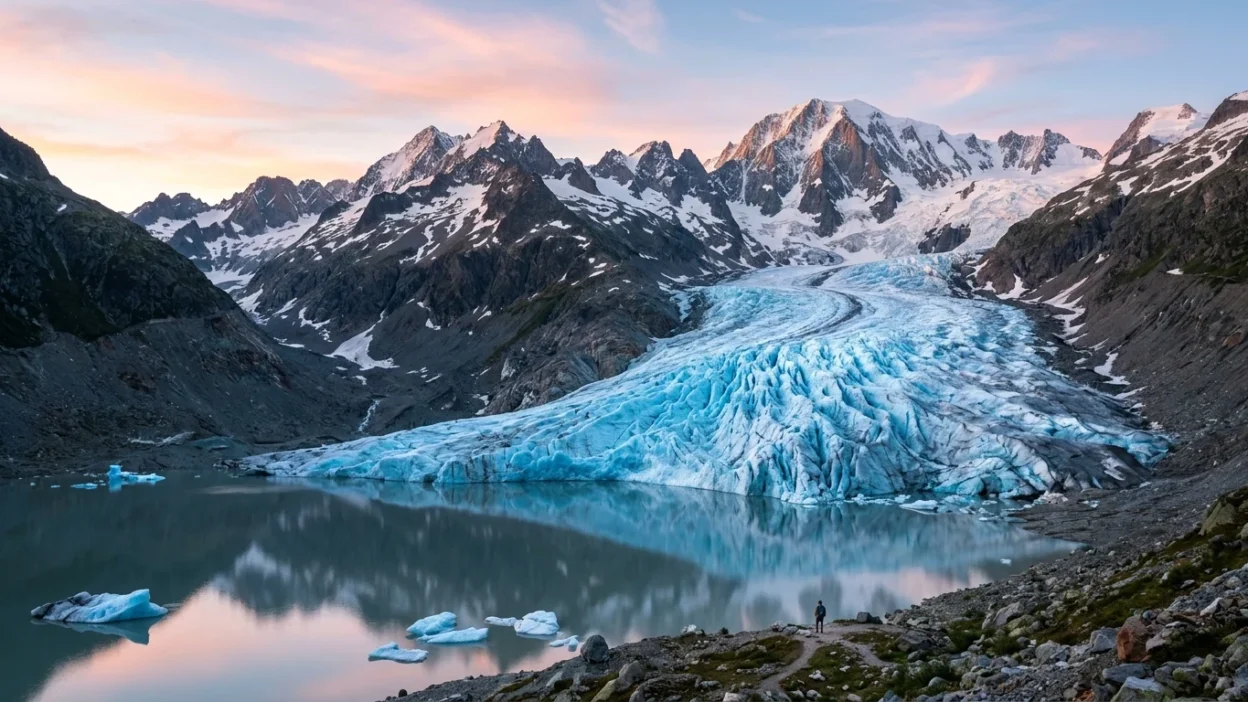
Glacier symbolism captures the quiet strength, slow transformation, and enduring presence found in nature’s most majestic ice formations.
From ancient cultures to modern interpretations, glaciers represent patience, resilience, and the deep forces shaping life beneath the surface.
What Is Glacier Symbolism?
Glacier symbolism refers to the meanings and ideas people associate with glaciers massive, slow moving bodies of ice that reshape landscapes over time. Because of their steady movement and immense power, glaciers often symbolize long term change, hidden emotions, and the passage of time.
In symbolic language, glaciers remind us that not all progress is fast. Some of the most meaningful transformations happen slowly, quietly, and persistently.
Core Symbolic Meanings of Glaciers
Here are some of the most widely recognized meanings linked to glacier symbolism:
| Symbolic Meaning | Description |
|---|---|
| Patience | Glaciers move slowly, teaching the value of waiting and endurance. |
| Hidden Depths | Much of a glacier lies beneath the surface, symbolizing unseen emotions or truths. |
| Transformation | They reshape landscapes over time, reflecting gradual but powerful change. |
| Emotional Coldness | Ice can represent distance, detachment, or suppressed feelings. |
| Strength | Despite their stillness, glaciers hold immense force and influence. |
| Timelessness | Glaciers connect to ancient history and the long passage of time. |
Spiritual Significance of Glacier Symbolism
Spiritually, glaciers often represent inner stillness and deep reflection. Their silent presence encourages introspection and mindfulness.
Many spiritual interpretations connect glaciers with:
- The power of stillness and meditation
- Emotional preservation or healing
- The journey of the soul over time
- Letting go of surface distractions to access deeper truths
A glacier can symbolize a spiritual awakening that unfolds slowly. It reminds us that growth doesn’t always happen in visible ways it often begins beneath the surface.
Glacier Symbolism in Culture and History
Throughout history, glaciers have inspired awe and reverence. In many northern and mountainous cultures, they were seen as sacred or mysterious forces of nature.
- In Arctic traditions, glaciers symbolize survival and adaptation in harsh environments.
- In folklore, they are sometimes viewed as ancient guardians holding the memory of the earth.
- Early explorers saw glaciers as both obstacles and symbols of nature’s untamed power.
Historically, glaciers also represent the unstoppable force of time slow yet inevitable.
Biblical and Religious Interpretations
While glaciers are not directly mentioned in the Bible, ice and cold imagery carry symbolic weight in religious texts.
Biblical symbolism often associates ice with:
- Divine power and control over nature
- Purity and cleansing
- Hardness of heart or spiritual distance
In this context, glacier symbolism can reflect both spiritual strength and emotional or spiritual barriers. It may represent a phase where faith feels distant but still holds deep potential beneath the surface.
Glacier Symbolism in Literature and Art
In literature and art, glaciers are powerful metaphors. Writers and artists use them to express emotional depth, isolation, and slow transformation.
Common artistic themes include:
- Frozen emotions waiting to thaw
- The passage of time and memory
- Isolation and introspection
- Nature’s quiet dominance over humanity
Glaciers often appear in stories as symbols of endurance, representing characters who carry deep, unspoken experiences.
Glacier Symbolism in Dreams
Dreaming about glaciers can carry significant meaning, often tied to emotions and personal growth.
Common interpretations include:
- Seeing a glacier: You may be dealing with suppressed emotions or slow progress in life.
- Walking on a glacier: You are navigating a delicate situation that requires patience.
- Melting glacier: Emotional release, healing, or change is approaching.
- Being trapped in ice: Feeling stuck, emotionally numb, or unable to express yourself.
Dreams involving glaciers often encourage self-reflection and emotional awareness.
Modern Interpretations of Glacier Symbolism
In today’s world, glacier symbolism has expanded to include environmental and emotional themes.
Modern meanings include:
- Climate awareness and the fragility of nature
- The urgency of slow but impactful change
- Emotional resilience in a fast paced world
- The contrast between stillness and rapid modern life
Glaciers now symbolize both endurance and vulnerability, reminding us of the balance between strength and change.
Conclusion
Glacier symbolism teaches a powerful lesson: not all change is immediate, and not all strength is loud. Like glaciers, life often moves slowly but with profound impact.
They remind us to embrace patience, honor hidden depths, and trust the quiet transformations shaping our journey.
FAQs
What does a glacier symbolize spiritually?
A glacier symbolizes inner stillness, deep emotional layers, and slow spiritual growth that unfolds over time.
Is glacier symbolism positive or negative?
It can be both. It represents strength and patience but may also symbolize emotional distance or stagnation.
What does dreaming about a glacier mean?
It often reflects suppressed emotions, slow progress, or a need for patience and introspection.
Why are glaciers associated with time?
Because they form and move over thousands of years, glaciers symbolize longevity and the passage of time.
What does a melting glacier symbolize?
A melting glacier represents emotional release, transformation, or urgent change in life.