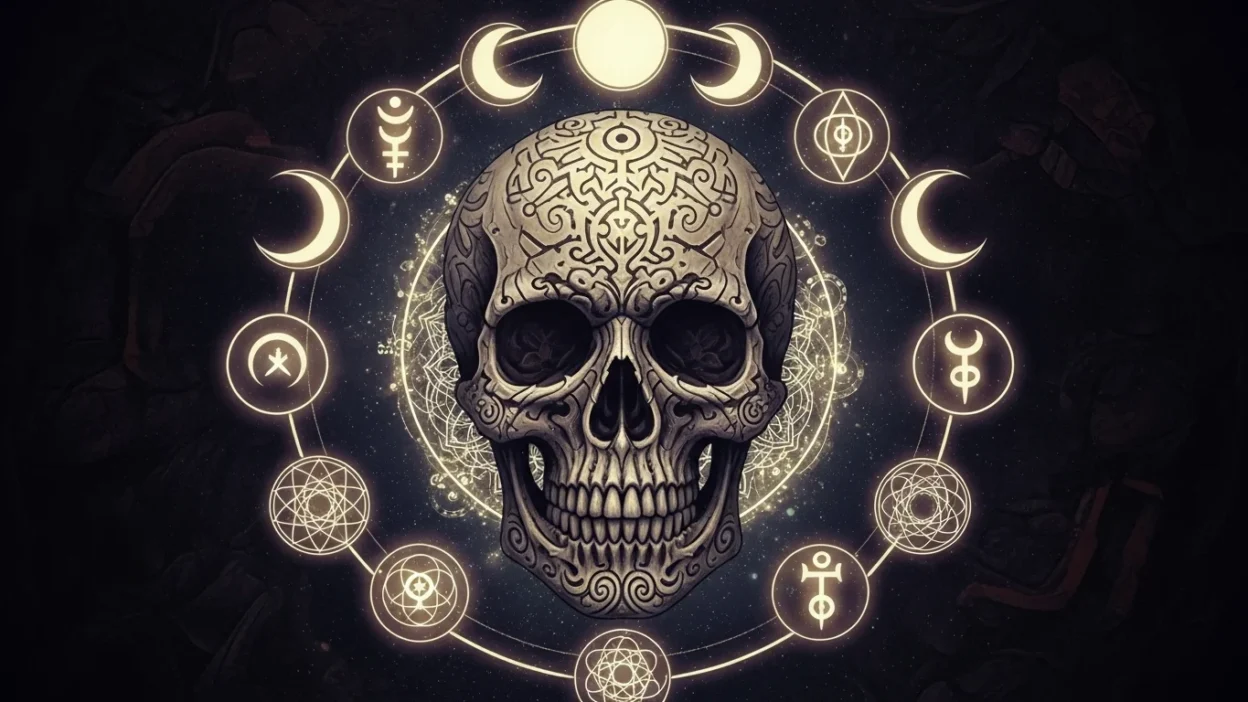
Skull symbolism has fascinated humans for centuries. The skull is one of the most powerful visual symbols in the world, representing themes like mortality, transformation, protection, wisdom, and the cycle of life and death. Across religions, cultures, literature, and modern art, the skull carries deep symbolic meaning that goes far beyond its physical form.
In this guide, we will explore the meaning of skull symbolism, its spiritual significance, historical interpretations, Biblical connections, and how the skull is viewed in modern culture.
What Does Skull Symbolism Mean?
At its core, skull symbolism represents the reality of human mortality. Because the skull remains long after the body decomposes, it has historically been a reminder that life is temporary.
However, the skull is not only a symbol of death. Many traditions view it as a representation of wisdom, protection, transformation, and rebirth.
Common symbolic meanings include:
| Symbolic Meaning | Explanation |
|---|---|
| Mortality | Reminder that life is temporary |
| Transformation | Symbol of change and personal growth |
| Protection | Used as a spiritual guard against evil |
| Power | Associated with warriors and strength |
| Wisdom | Represents knowledge gained through experience |
| Rebirth | Connection between death and new life |
Because of these meanings, skull symbolism often carries both dark and enlightening interpretations.
Spiritual Significance of Skull Symbolism
Spiritually, the skull is often seen as a gateway between life and the afterlife. Many spiritual traditions believe it represents the soul’s journey beyond the physical body.
In meditation and spiritual reflection, skull imagery can symbolize:
Awareness of Life’s Impermanence
The skull reminds people to appreciate the present moment and live intentionally.
Transformation of the Soul
Some traditions interpret skull symbolism as the shedding of the physical form so the soul can evolve.
Spiritual Protection
In certain rituals and traditions, skull imagery is believed to ward off negative energies and evil spirits.
Instead of being purely ominous, the skull often encourages spiritual awakening and reflection on life’s deeper purpose.
Skull Symbolism in History and Culture
Throughout history, skulls have appeared in rituals, art, and cultural traditions around the world.
Ancient Civilizations
Many ancient societies used skulls in spiritual ceremonies.
- Warriors displayed skulls as symbols of victory and power.
- Shamans used skull imagery to represent the connection between the living and the spirit world.
Mexican Day of the Dead
One of the most famous examples of skull symbolism appears in the Day of the Dead celebrations, where decorative sugar skulls celebrate deceased loved ones.
Instead of mourning death, the skull here represents remembrance, love, and celebration of life.
Medieval Europe
In medieval Christian art, skulls were often included in paintings and sculptures as memento mori, meaning “remember that you will die.”
These reminders encouraged people to focus on faith, humility, and spiritual preparation.
Biblical Meaning of the Skull
In Biblical symbolism, the skull often appears in connection with mortality and redemption.
One significant reference is Golgotha, meaning “the place of the skull,” where Jesus was crucified.
This location symbolizes:
- The reality of death
- The sacrifice of Christ
- The promise of resurrection and salvation
In Christian art, skulls are sometimes shown beneath the cross to represent human mortality redeemed through faith.
Thus, skull symbolism in the Bible is both solemn and hopeful.
Skull Symbolism in Literature and Art
Skulls have long been used in literature and artistic expression to explore themes of life and death.
Shakespeare and the Skull
One of the most famous examples appears in Shakespeare’s Hamlet, when Hamlet holds Yorick’s skull and reflects on the nature of existence.
This moment symbolizes:
- The fragility of life
- The equality of all people in death
- Deep philosophical reflection
Artistic Symbolism
Artists often use skull imagery to create contrast between beauty and decay. Paintings in the vanitas tradition include skulls alongside objects like flowers or clocks to show that time and life are fleeting.
Skull Symbolism in Dreams
Dreaming about skulls can carry several symbolic interpretations depending on the context.
Common dream meanings include:
- Personal transformation – Letting go of an old identity
- Facing fears – Confronting difficult truths
- Spiritual awakening – Becoming aware of deeper life meaning
- End of a cycle – Completion of a phase in life
Rather than predicting literal death, skull dreams often symbolize inner change and emotional growth.
Modern Interpretations of Skull Symbolism
In modern culture, skull symbolism appears in fashion, tattoos, art, and design.
Skull Tattoos
People often choose skull tattoos to represent:
- Strength through hardship
- Survival and resilience
- Acceptance of mortality
Fashion and Pop Culture
Skull imagery is popular in clothing and accessories because it represents rebellion, individuality, and fearless living.
Symbol of Transformation
Many modern interpretations emphasize the skull as a symbol of personal transformation and embracing life fully despite its temporary nature.
Common Interpretations of Skull Symbolism
Here are some of the most widely recognized symbolic meanings:
- Reminder of life’s fragility
- Acceptance of mortality
- Transformation and rebirth
- Wisdom gained through experience
- Protection from negative forces
- Celebration of life and memory
These interpretations show that skull symbolism is not purely negative but deeply philosophical and spiritual.
Conclusion
Skull symbolism carries powerful meanings that have evolved across cultures, religions, and centuries. While it often represents mortality, it also reminds us of transformation, wisdom, protection, and the cycle of life.
Rather than focusing only on death, the skull encourages reflection on how we live, grow, and find meaning in life’s temporary journey. Its enduring presence in art, spirituality, and modern culture proves that the skull remains one of the most profound symbols of human existence.
FAQs
What does skull symbolism represent?
Skull symbolism commonly represents mortality, transformation, wisdom, protection, and the cycle of life and death.
Is the skull a negative symbol?
Not necessarily. While it represents death, many cultures view the skull as a symbol of protection, spiritual awakening, and rebirth.
What does a skull symbolize spiritually?
Spiritually, the skull can represent the soul’s journey, awareness of life’s impermanence, and transformation beyond the physical body.
What does seeing a skull in a dream mean?
Dreaming of a skull often symbolizes personal transformation, confronting fears, or the end of an important life phase.
Why are skulls used in art and fashion?
Skulls are used to represent individuality, rebellion, philosophical reflection on life, and the acceptance of mortality.