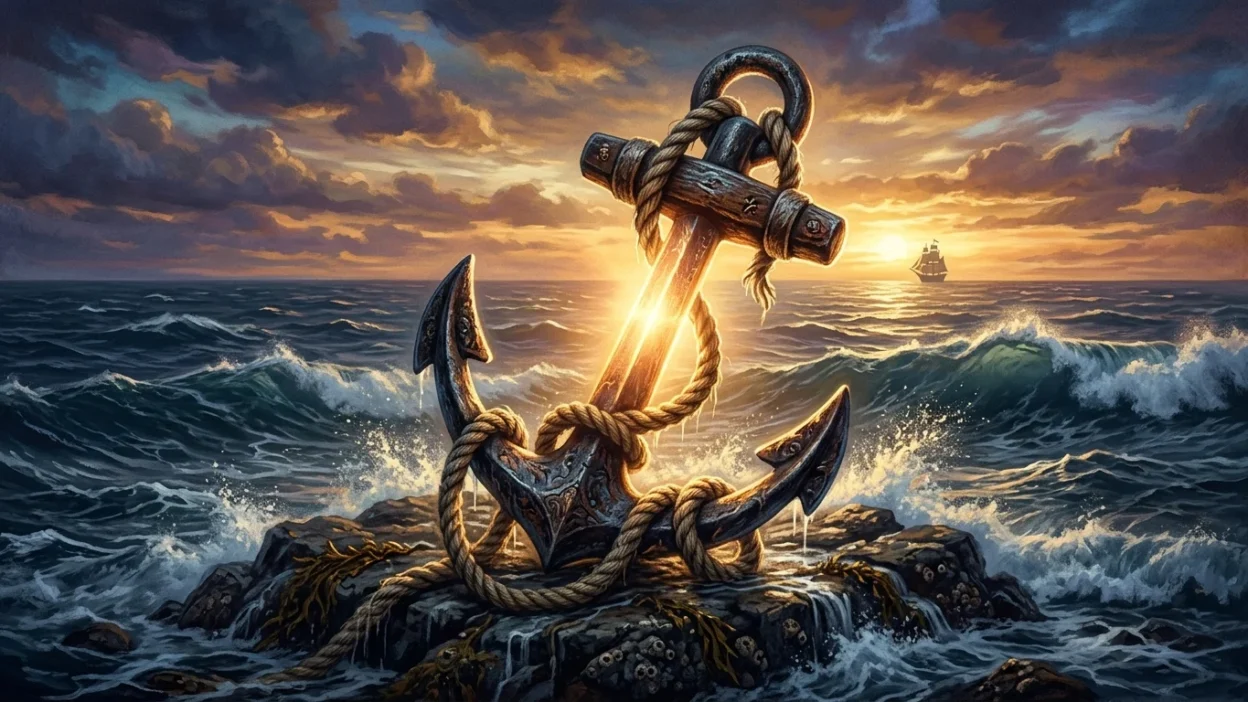
Anchor symbolism has fascinated people for centuries. From ancient sailors to modern tattoo lovers, the anchor represents stability, hope, and strength in difficult times. Because it keeps ships steady against waves and storms, the anchor has naturally become a powerful symbol across cultures, religions, and spiritual traditions.
Today, anchor symbolism appears in art, jewelry, literature, tattoos, and even dreams. Understanding its deeper meanings can reveal why this simple maritime tool carries such a profound emotional and spiritual message.
What Does the Anchor Symbol Mean?
At its core, the anchor symbolizes stability and grounding. Just as it holds a ship firmly in place, symbolically it represents the ability to stay steady during life’s storms.
Common meanings of anchor symbolism include:
- Stability and security
- Hope during difficult times
- Strength and resilience
- Faith and spiritual grounding
- Loyalty and commitment
For many people, the anchor reminds them to remain strong even when circumstances become uncertain.
Key Symbolic Meanings of the Anchor
| Symbolic Meaning | Explanation |
|---|---|
| Stability | Staying firm during emotional or life challenges |
| Hope | Belief that calm waters will return after storms |
| Strength | Inner resilience and endurance |
| Faith | Spiritual trust and devotion |
| Loyalty | Commitment to people, values, or beliefs |
This versatility makes the anchor one of the most meaningful universal symbols.
Spiritual Significance of Anchor Symbolism
Spiritually, the anchor represents grounding the soul. Many traditions interpret it as the force that keeps a person connected to their higher purpose or faith.
An anchor can symbolize:
- Remaining spiritually centered
- Finding peace during chaos
- Trusting divine guidance
- Emotional balance and inner stability
For individuals on spiritual journeys, the anchor acts as a reminder that calmness and clarity are always possible despite life’s storms.
Anchor Symbolism in Christianity and the Bible
In Christianity, the anchor is a powerful symbol of hope and faith.
The Biblical reference appears in the Book of Hebrews, which describes hope as an anchor for the soul. This imagery helped early Christians express their faith in times of persecution.
The Christian anchor symbolizes:
- Unshakable faith in God
- Hope in salvation
- Spiritual security
- Strength through belief
In early Christian art, the anchor was sometimes used as a secret symbol for the cross.
Historical and Cultural Symbolism of Anchors
Anchors have long been connected to maritime life and exploration.
Ancient Maritime Culture
For sailors, the anchor represented safety and survival. Returning safely to harbor meant the anchor had done its job.
Roman and Greek Symbolism
In classical cultures, anchors were associated with good fortune, stability, and protection during sea journeys.
Naval Traditions
Many naval forces adopted anchor imagery to represent discipline, strength, and duty. Even today, anchors appear in naval insignias worldwide.
Anchor Symbolism in Literature and Art
Artists and writers frequently use the anchor as a metaphor.
In literature, anchors often symbolize:
- Emotional grounding
- Loyalty between lovers
- Hope during adversity
Visual art and jewelry frequently portray anchors combined with hearts, ropes, or crosses. These combinations deepen the symbolism of love, faith, and stability.
Anchor Symbolism in Dreams
Dreaming of an anchor can carry several symbolic meanings depending on the context.
Common Dream Interpretations
- Seeing an anchor: desire for stability or security
- Dropping an anchor: making an important life decision
- Raising an anchor: preparing for change or new beginnings
- Broken anchor: feeling uncertain or emotionally ungrounded
Dream anchors often appear when a person seeks emotional balance.
Anchor Symbolism in Modern Life
Today, anchor symbolism appears in many forms, especially tattoos, fashion, and motivational imagery.
Anchor Tattoo Meaning
Anchor tattoos often symbolize:
- Personal strength
- Remaining grounded in life
- Loyalty to loved ones
- Hope through hardships
Jewelry and Fashion
Anchor jewelry represents balance and protection, making it popular among people seeking meaningful accessories.
Personal Growth Symbol
In modern self-development culture, the anchor represents staying grounded while pursuing dreams
Conclusion
Anchor symbolism continues to inspire people across cultures and generations. What began as a simple maritime tool has evolved into a powerful symbol of hope, stability, faith, and resilience.
Whether seen in religious traditions, tattoos, dreams, or literature, the anchor reminds us that even during the strongest storms, we can stay grounded and secure.
Ultimately, the anchor encourages us to hold firmly to our values, beliefs, and inner strength while navigating the unpredictable waters of life.
FAQs
What does the anchor symbolize spiritually?
Spiritually, the anchor represents grounding, inner peace, and trust in divine guidance during uncertain times.
What does an anchor tattoo mean?
An anchor tattoo typically symbolizes stability, strength, loyalty, and the ability to stay grounded despite challenges.
What does the anchor symbolize in Christianity?
In Christianity, the anchor represents hope and faith in God, inspired by the Biblical idea of hope as an anchor for the soul.
What does dreaming about an anchor mean?
Dreaming about an anchor usually reflects a desire for stability, emotional security, or making an important life decision.
Why is the anchor a symbol of hope?
Because it keeps ships safe during storms, the anchor naturally became a metaphor for hope and reassurance during difficult situations.